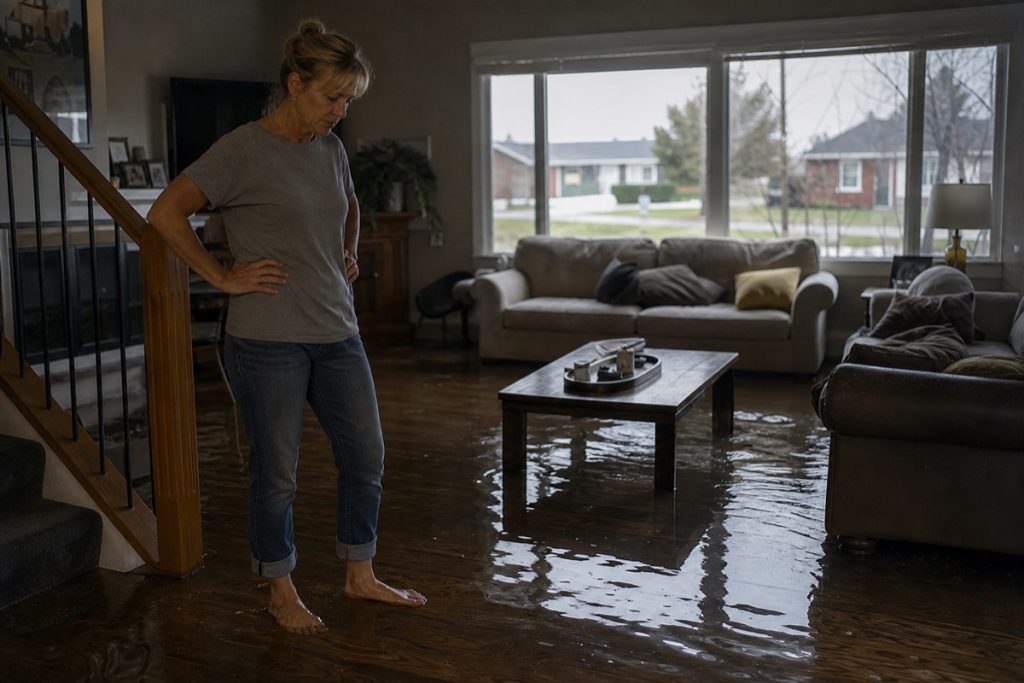
The first day after a flood sets up everything that follows — whether you stay safe, how much of your home gets saved, and whether your insurance claim goes smoothly. When you’re standing in water it’s hard to think straight, so here’s the order to do things in. Follow it top to bottom.
Step 1 — Safety first, before anything else
Nothing you own is worth getting hurt over. Before you touch the water or start saving things:
- Watch for electricity. If water is anywhere near outlets, appliances, or the electrical panel, do not wade in. Water and electricity are a lethal combination. Cut the power at the breaker only if you can reach it without standing in water and with dry hands. If you can’t reach it safely, leave it and call an electrician or your utility.
- Treat dirty water as a hazard. If the water came from outside (a storm, a bayou, the street) or from a sewer line, it’s contaminated — it can carry sewage, chemicals, and bacteria. Don’t walk through it or touch it without waterproof boots and gloves. This is not water you clean up bare-handed.
- Check the structure. If ceilings are sagging, floors feel soft, or the building feels unstable, get out and stay out until a professional says it’s safe.
If the flooding is severe or the water is contaminated and widespread, the right first call may be to emergency services or your utility — not a mop.
Step 2 — Stop the damage from getting worse
Once you’re sure it’s safe to move around:
- Find and stop the source if it’s plumbing. If the water is coming from a burst pipe or a fixture inside the house, shut off the water main. Know where that valve is before an emergency — it’s usually where the water line enters the house or near the meter. (If the source is a pipe, our burst pipe page covers the follow-up.)
- Move what you can to dry ground. Electronics, documents, photos, valuables, and anything that can be lifted off a wet floor. Get furniture legs onto blocks or foil if you can’t move the piece.
- Get air moving — carefully. If it’s safe and the power is on in dry areas, open windows and run fans to start air circulation. But know the limit: home fans dry surfaces, not the water inside your walls, subfloor, and cabinets. That hidden moisture is what causes mold and rot, and it needs commercial equipment to reach.
Step 3 — Document everything (before you clean up)
This step protects your claim, and people skip it because they’re in a hurry to clean. Don’t.
- Photograph and video every affected room before you move or throw anything out. Wide shots and close-ups.
- Make a list of damaged items — furniture, electronics, flooring, anything.
- Don’t dispose of large damaged items yet. Your insurer may want to see them. Documenting first, then disposing, keeps the claim clean.
Insurance adjusters pay claims based on evidence. The homeowners whose claims go smoothly are the ones who took two minutes to document before they started hauling things out.
Step 4 — Call for professional extraction
Here’s the part that decides how much you lose. The mold clock starts around 48 hours after water damage — and faster in Houston’s humidity. The sooner extraction and proper drying begin, the less gets ruined and the lower your final bill.
A restoration crew does what a wet-vac and box fans can’t: they pull water out of the structure, then use commercial air movers and dehumidifiers to dry inside walls and under floors, and they measure moisture to confirm it’s actually dry — not just dry to the touch. They’ll also find the water you can’t see, which is usually more than you think. (This is the job our flood cleanup and water damage cleanup crews handle.)
What NOT to do
A few mistakes make things worse or more expensive:
- Don’t wait to “see if it dries.” It won’t dry inside the walls, and every hour raises the mold risk.
- Don’t run your AC or heater if the ducts may have flooded — you’ll blow contamination and moisture through the whole house.
- Don’t clean up contaminated (flood or sewage) water yourself — it’s a health hazard that needs proper handling. (Here’s why.)
- Don’t throw everything out before documenting — you may need it for the claim.
- Don’t assume it’s minor because the surface looks okay. Water hides.
The one thing that matters most
If you remember nothing else: act fast. Safety first, then stop the water, then document, then get extraction going. The homeowners who come through a flood with the least damage and the smallest bills aren’t lucky — they got water out and drying started before it had time to soak in and spread.
House taking on water right now? A Houston crew can start extraction today. Call (713) 422-2550 — the line is answered 24/7.
Frequently asked questions
What should I do first when my house floods?
Safety first — stay clear of water near electricity, treat dirty water as a hazard, and check the structure is safe. Then stop the source, document, and call for extraction.
Should I turn off the electricity if my house floods?
Only if you can reach the breaker without standing in water and with dry hands. If you can’t do it safely, leave it and call an electrician or your utility.
How long do I have before mold starts?
Roughly 48 hours, and faster in Houston’s humidity — which is why professional drying should start as soon as possible.
Can I clean up flood water myself?
Clean water from a pipe, maybe. But flood water from outside or a sewer backup is contaminated and should be handled by a crew with the right protection and disinfection.
Water damage in your home right now?
Don't wait for it to spread. Talk to a Houston crew, 24/7.
Call (713) 422-2550More Houston water damage guides
Water spreading right now? Don't wait.
Every hour costs you more in damage. Call now and get a Houston crew moving.