Ceiling Water Damage Repair in Houston
A brown ring, a bubble in the paint or a steady drip all mean water is getting in from above. Call and we'll connect you with an independent local company to find the source, dry the cavity and repair the ceiling.
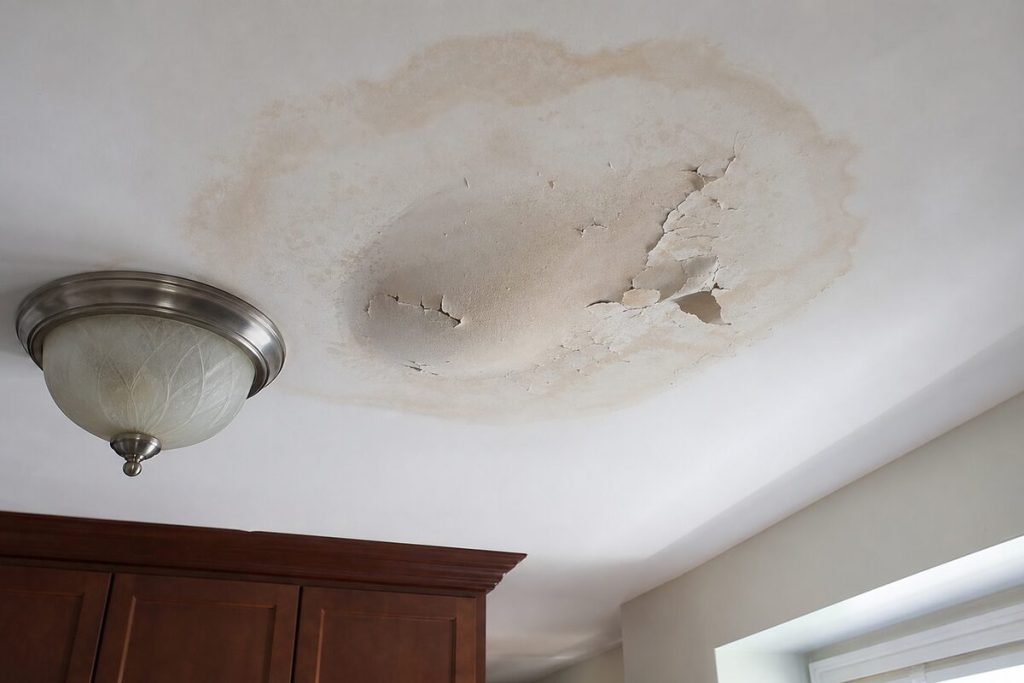
Ceiling damage is the one kind of water damage you usually see from underneath, after the water has already soaked insulation and pooled on the back of the drywall. That's why patching and painting is almost never the fix. A proper repair answers three questions in order: where is the water coming from, how much of the ceiling cavity is wet, and which drywall can be saved.
Is it serious? A quick triage
| What you see | What it usually means | How fast to act |
|---|---|---|
| Faint, dry, yellow-brown ring that hasn't changed in months | An old leak that has probably been fixed | Confirm it's dry with a moisture meter, then seal and paint |
| Stain that is growing, darkening or damp to the touch | An active leak, still feeding water | Same day |
| Bubbling or peeling paint, soft spots | Water trapped behind the paint film or drywall saturated | Same day |
| Sagging or bulging section | Water pooling on top of the drywall; collapse risk | Now. Clear the room. |
| Musty smell or dark spotting | Moisture has been there long enough for mold | Soon, and don't disturb it |
If a ceiling is bulging: keep everyone out from under it, move furniture and electronics, and put down a bucket and tarp. Some people relieve the weight by poking a small hole at the lowest point of the bulge with a screwdriver so it drains into a bucket. Only do that if you can reach it safely from a stable ladder, there's no light fixture or wiring nearby, and the ceiling isn't already cracking. If in doubt, leave it for the crew.
Where the water is coming from
The stain is rarely directly under the leak. Water runs along roof decking, rafters and the top of drywall before it finds a low spot. The usual suspects in Houston homes:
- Roof leaks after storms: lifted or missing shingles, failed flashing around vents and chimneys, and worn pipe boots. Stains that appear or grow after heavy rain point here.
- Attic air conditioning. In homes where the air handler sits in the attic, a clogged condensate drain line or a rusted secondary pan can overflow every time the AC runs, and Houston's AC runs most of the year. Stains near a return vent or the attic access, worse in summer, often point here.
- Plumbing above: supply lines, a toilet wax ring or a shower pan on the second floor, or water lines routed through the attic.
- Attic condensation from poor ventilation or a disconnected bath fan duct, which drips onto the ceiling below on humid days.
- Frozen attic pipes during a hard freeze, as many Houston homeowners found out in February 2021.
How ceiling water damage is repaired
- Stop the source. A roofer, plumber or HVAC tech fixes the cause first. If the roof can't be repaired immediately, a tarp buys time.
- Measure the wet area from below with a moisture meter and, ideally, from the attic side. Wet insulation is the giveaway; blown-in insulation that got soaked loses its value and usually has to be replaced.
- Dry the cavity. Small areas of sound drywall can sometimes be dried in place with air movers and dehumidifiers. Saturated sections are cut out so the space above can dry.
- Replace damaged drywall that is sagging, crumbling, soft, stained through or moldy. Ceiling drywall that held water loses strength and won't go back to flat.
- Prime with a stain-blocking primer, re-texture and paint. Matching popcorn or knockdown texture is part of the job and worth asking about up front.
If moisture readings show mold has started, it should be handled before the ceiling is closed back up. In Texas, larger mold jobs fall under state licensing rules; see our mold remediation page.
What drives the cost
Every quote will hinge on the same factors: how large an area is affected, whether drywall is dried in place or replaced, whether insulation must be pulled, texture matching, and whether the source repair (roof, AC, plumbing) is included. Insist on a written scope that separates the mitigation (drying) from the repair (drywall, texture, paint). For broader numbers, see our Houston water damage cost guide.
Will insurance cover it?
Usually when the cause was sudden, like a pipe that burst or a storm that damaged the roof. Ceiling damage from a roof that leaked slowly for months, or from long-term condensation, is commonly denied as wear and tear or gradual leakage. Photograph the ceiling and the source the day you find it.
Frequently asked questions
Can I just paint over a water stain on the ceiling?
Only after the leak is fixed and a moisture meter confirms the drywall is dry. Then use a stain-blocking primer first; ordinary paint lets the brown ring bleed back through.
Why does my ceiling only leak when it rains hard?
That pattern almost always means the roof or flashing. Wind-driven rain can get under shingles that hold up fine in a light shower, and the water can travel several feet before it reaches the ceiling.
My ceiling stain gets worse in summer, not when it rains. Why?
Look at the AC. An attic air handler with a clogged condensate line or a full drain pan can overflow whenever the system runs. An HVAC tech can clear the line and check the pan and float switch.
How long does a wet ceiling take to dry?
A small area of sound drywall can dry in a few days with equipment. Saturated drywall and wet insulation are usually faster to remove and replace than to dry.
Is a sagging ceiling an emergency?
Yes. The drywall is holding water it wasn't designed to carry and can fall without warning. Keep people and pets out of the room.
Related services
Independent local crews. Ask the right questions.
Independent local companies
Rapid Dry Houston is a referral service. We connect you with independent restoration companies that serve your area; they inspect, quote and do the work.
Check licenses & insurance
Before work starts, ask any crew for proof of insurance and its IICRC certifications (S500 water, S520 mold, S700 fire & smoke). Reputable companies share them gladly.
Get the scope in writing
Ask for a written scope and an itemized estimate before work begins, plus moisture readings that show the structure is actually dry before the job is called done.
Document for insurance
Photos, moisture logs and a line-item estimate in the format adjusters expect keep a claim moving. Ask the crew to provide them, and keep your own photos too.
Ceiling stained, sagging or dripping?
Call and we'll connect you with an independent local company that can trace the leak and repair the ceiling.