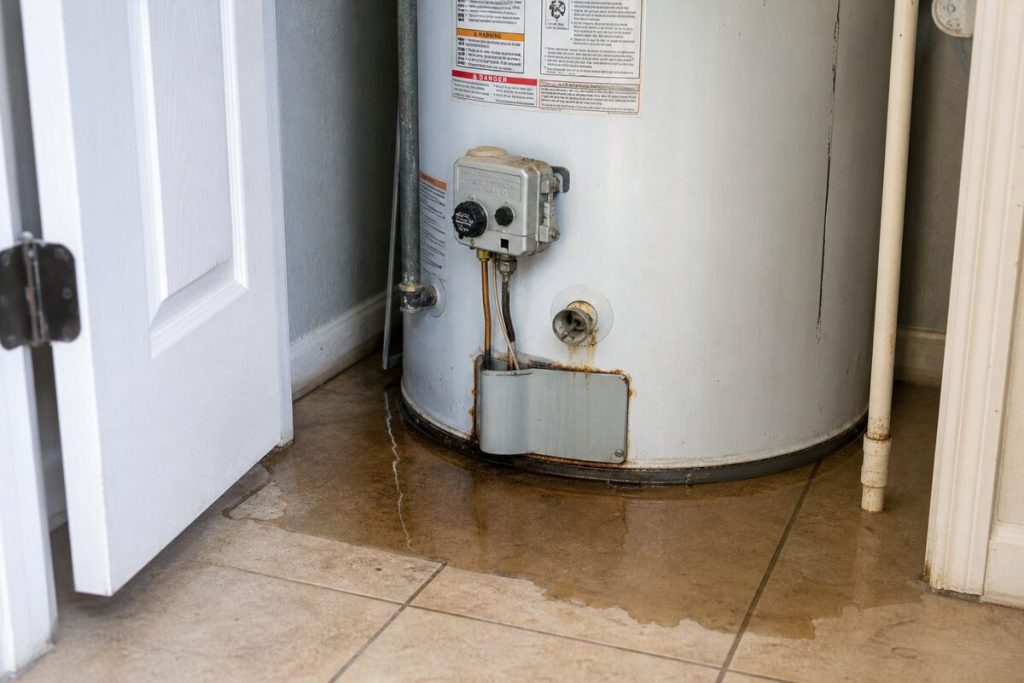
If your water heater is leaking or has burst, do three things in order: shut off the water to the tank, shut off its power or gas, and start moving water away from anything it can damage. A 40–50 gallon tank can empty across your floor in minutes, so the first few matter.
Here’s the full sequence, and how to tell a slow drip from an emergency.
What do I do first if my water heater is leaking?
- Shut off the water. Turn the valve on the cold-water pipe at the top of the heater clockwise. If there isn’t one or it’s stuck, shut off your home’s main water valve.
- Cut the power or gas. Electric: switch the water heater’s breaker off. Gas: turn the gas control dial to “Off.” Running a heater dry can damage it and be dangerous.
- Contain and document. Towels, a wet-vac, and lift items off the floor — and photograph everything before you clean, in case you file a claim.
Is a leaking water heater an emergency?
It can be. A slow drip from a fitting might just be a repair. But a burst tank, water seeping from the bottom (usually rust — the tank is failing), or water reaching walls, baseboards, or the next room is an emergency, because it’s now soaking into the structure. Heaters in attics or upstairs closets — common in Houston — are worse: the water travels down through ceilings and walls on its way to the floor.
Why is water heater damage worse than it looks?
Because most of it is hidden. The puddle you see is small next to what’s already wicked into drywall, subfloor, and cabinets. Left alone, that trapped moisture warps floors and grows mold — often within 24–48 hours in Houston’s humidity. Towels and a box fan dry the surface, not the water inside the structure. (It’s the same hidden-moisture problem behind any burst pipe.)
Do I need a restoration crew or just a plumber?
Often both, for different jobs. A plumber repairs or replaces the heater. A water damage cleanup crew handles the water it left behind — extracting it, drying the structure with commercial air movers and dehumidifiers, and confirming with moisture meters that walls and floors are actually dry. A small drip caught on a hard floor may only need the plumber; anything that reached drywall, carpet, or a lower floor needs drying started fast.
Water heater flooded a room? A Houston crew can extract and dry it today, before it spreads. Call (713) 422-2550 — answered 24/7.
Frequently asked questions
How do I stop a leaking water heater?
Turn off the cold-water valve on top of the tank (or your home’s main valve), then cut the power at the breaker or turn a gas unit’s control to “Off.”
Should I turn off a water heater that’s leaking?
Yes. For electric units flip the breaker; for gas turn the control dial to off. Letting a heater run dry can damage it and create a hazard.
Is a leaking water heater an emergency?
A burst tank, or water reaching walls, floors, or another room, is an emergency — the water is soaking into the structure and drying should start fast.
Can I clean up water heater damage myself?
A small, freshly caught drip on a hard floor, maybe. Water that reached drywall, cabinets, or subfloor needs professional extraction and drying to prevent mold.
Water damage in your home right now?
Don't wait for it to spread. Talk to a Houston crew, 24/7.
Call (713) 422-2550More Houston water damage guides
Water spreading right now? Don't wait.
Every hour costs you more in damage. Call now and get a Houston crew moving.