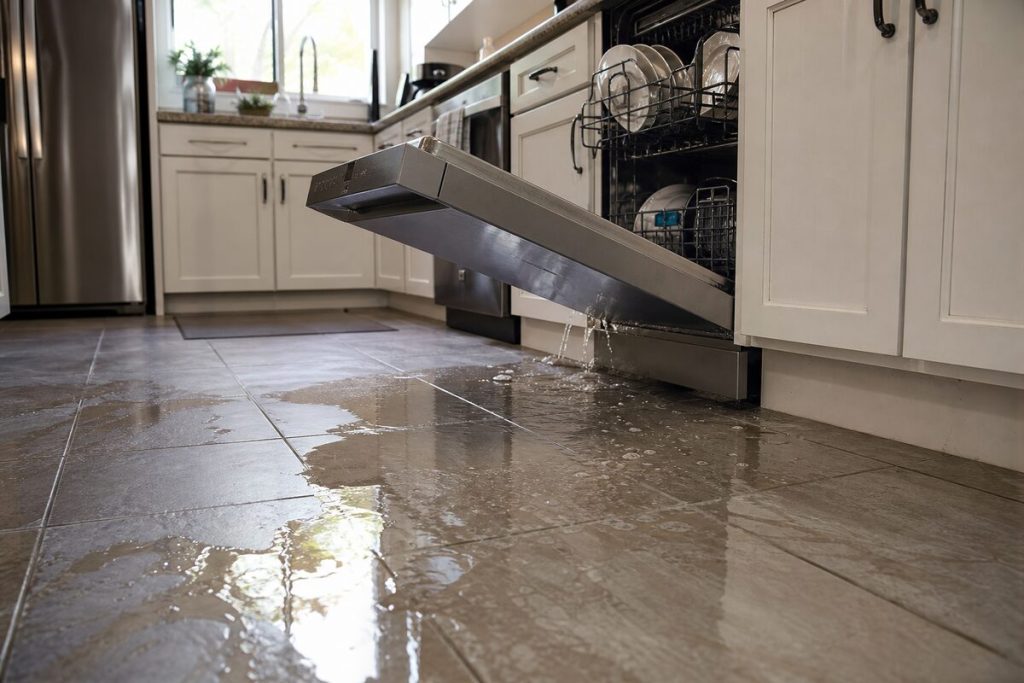
When a dishwasher, washing machine, refrigerator, or water heater floods a room, do this first: stop the water at the appliance’s shutoff valve (or the home’s main), cut power to the appliance, then get the water off the floor fast. Appliance leaks are one of the most common sources of home water damage — and because they happen behind and under units, they often run a while before anyone notices.
What do I do when an appliance floods my kitchen?
- Stop the water. Turn off the appliance’s supply valve — under the sink for a dishwasher, behind a washer, behind the fridge. If you can’t reach it, shut the main.
- Cut the power. Unplug the appliance only if you can do it safely — never reach into standing water near an outlet. If in doubt, flip the breaker.
- Get water up fast. Towels, a wet-vac, and move items off the floor. Photograph everything before cleanup for a possible claim.
- Check underneath and next door. Water runs under cabinets and into adjoining rooms — and downstairs if you’re on a second floor.
Which appliances cause the worst water damage?
Washing machines and dishwashers top the list — supply hoses burst, drains clog, and door seals fail. Refrigerator ice-maker lines are sneaky: a slow drip behind the fridge can soak the subfloor for weeks. Water heaters can dump their entire tank. The common thread is that the water starts hidden — under or behind the unit — so the damage is bigger than the puddle suggests.
Why can’t I just mop it up?
Because the water you see isn’t the problem — the water under the cabinets, in the subfloor, and behind the toe-kick is. Mopping and a fan dry the surface while moisture stays trapped, and in Houston’s humidity that trapped water grows mold in 24–48 hours and warps flooring. A water damage cleanup crew pulls that hidden moisture out with commercial drying equipment and confirms it’s dry with meters.
Is it covered by insurance?
Usually, if it’s sudden and accidental — a burst hose or a failed valve. Gradual leaks you “should have caught” often aren’t covered, which is why documenting the sudden failure with photos matters. (It’s the same principle as a burst pipe claim.)
Appliance flooded your floor? A Houston crew can dry it properly today. Call (713) 422-2550 — 24/7.
Frequently asked questions
What should I do first when an appliance floods?
Stop the water at the appliance’s shutoff valve or the home’s main, cut power to the unit safely, then get the water up and photograph the damage.
Why is appliance water damage worse than it looks?
The leak starts hidden under or behind the unit, so water soaks cabinets and subfloor before you see a puddle — the visible water is only part of it.
Does insurance cover a dishwasher or washing machine leak?
Usually if the failure was sudden and accidental, like a burst hose. Slow, long-running leaks are often excluded, so document the sudden failure with photos.
Can I clean up an appliance leak myself?
A small, fresh spill on a hard floor, maybe. Water that reached cabinets, flooring, or subfloor needs professional drying to keep mold from starting.
Water damage in your home right now?
Don't wait for it to spread. Talk to a Houston crew, 24/7.
Call (713) 422-2550More Houston water damage guides
Water spreading right now? Don't wait.
Every hour costs you more in damage. Call now and get a Houston crew moving.