Commercial Water Damage Restoration in Houston
For offices, retail, restaurants, apartment and condo buildings, warehouses and medical suites. Call and we'll connect you with an independent Houston restoration company that takes on commercial water losses.
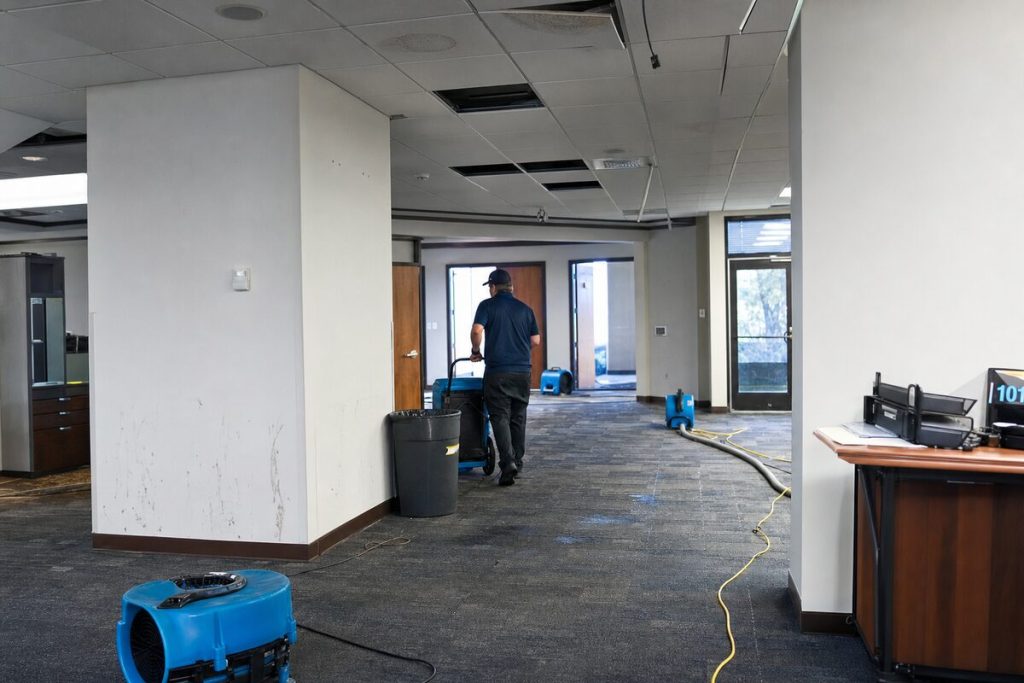
A water loss at a commercial property is a different problem from one at a house. The square footage is bigger, there are more people involved (owners, tenants, property managers, insurers, sometimes an HOA board), and every day the space is closed costs money. The drying science is the same, but the planning isn't. This page is written for property managers, business owners and building owners in the Houston area who need to get a space dry, documented and back in use with as little disruption as possible.
The first hour at a commercial property
- Stop the water. Know where your building's main shut-off and riser valves are before you need them. If a fire sprinkler line has broken, shutting it down takes the system out of service. Follow your sprinkler impairment procedure, notify your alarm monitoring company, and arrange a fire watch if your fire marshal or insurer requires one.
- Protect people. Keep occupants away from wet electrical equipment, sagging ceiling tiles and slippery floors. Cordon off the area.
- Notify the right people. The building owner or property manager, affected tenants, your insurance agent or carrier, and, for condos and HOAs, the association's management company.
- Document. Photos and video of the source, the water and every affected suite before anything is moved. Note the time the leak was found.
- Move what you can. Files, computers, inventory and anything sitting on the floor, starting with what's hardest to replace.
Where commercial water damage usually comes from
- Fire sprinkler pipe breaks, often from freezing in unheated spaces, mechanical damage, or corrosion in older systems. They release a lot of water fast.
- Flat roofs and roof drains clogged with debris during heavy Houston downpours, so water ponds and finds its way in.
- Rooftop HVAC units and condensate lines that overflow into ceiling plenums, showing up as stained or collapsed ceiling tiles.
- Restroom and break-room plumbing: supply lines, flush valves, water heaters and ice machines.
- Units above: in apartment, condo and multi-story office buildings, one leak can affect several floors of tenants below.
- Storms and flooding: wind-driven rain through storefronts and window systems, and rising water at ground-level units.
The February 2021 freeze showed how many Houston-area commercial buildings have sprinkler and plumbing lines in spaces that aren't protected from freezing. If your property was affected then, it's worth reviewing which lines are at risk now.
Keeping the business open while it dries
A good commercial restoration plan is built around your operations, not just the water. Things to ask for:
- Phased work: drying and tear-out section by section, so unaffected areas stay open.
- Containment: plastic barriers and negative air with HEPA filtration to keep dust and odors out of occupied areas.
- After-hours or weekend work for noisy demolition in retail, restaurant and office settings.
- Equipment capacity: large losses can need dozens of dehumidifiers and air movers, plus temporary power. Ask whether the company has enough equipment on hand for your square footage.
- A single point of contact who updates you, the owner and the insurer.
Business interruption and who pays for what
Commercial losses often involve more than one insurance policy, so sorting out responsibility early avoids delays:
- The building owner's property policy generally covers the structure and common areas.
- A tenant's policy may cover their contents, inventory, equipment, and the improvements they paid for (often called tenant improvements or improvements and betterments), depending on the lease.
- Business income (business interruption) coverage may pay lost income and continuing expenses while the business can't operate, usually only when the closure results from direct physical damage by a covered cause, and often after a waiting period stated in the policy. Extra expense coverage may pay costs to keep operating, such as temporary space.
- Condominiums: the association's master policy and the unit owner's own policy split responsibility according to the governing documents.
Keep records of lost sales, payroll for idle staff, overtime and temporary relocation costs from the first day. Your lease, your declarations pages and your agent are the authorities on what applies. This is general information, not legal or insurance advice.
Flood insurance for commercial buildings
Standard commercial property policies typically exclude flood, meaning rising water from outside. Through the National Flood Insurance Program, non-residential buildings can be insured for up to $500,000 for the building and $500,000 for contents. New NFIP policies usually have a 30-day waiting period, so they need to be in place well before hurricane season. Many larger Houston properties carry private or excess flood coverage above the NFIP limits. If your loss came from rising water, see flood cleanup in Houston.
Contaminated water, mold and health-sensitive spaces
Sewage backups, floodwater and water that has sat for days are treated as contaminated, and porous materials they touch are removed. Restaurants, medical and dental offices, daycares and food warehouses may also have health-department or regulatory obligations after a water event, so check with the relevant agency before reopening. In Texas, mold remediation of 25 contiguous square feet or more must be done by a remediation contractor licensed by the Texas Department of Licensing and Regulation, following a protocol written by a separately licensed mold assessment consultant. If the water has been sitting long enough for mold to grow, plan for that step. See our sewage backup cleanup page for Category 3 losses.
Permits for commercial repairs in Houston
Inside City of Houston limits, repairs to commercial and multi-family buildings go through the Houston Permitting Center, and properties in a mapped floodplain have additional flood-damage repair requirements. Get the permit question settled before demolition turns into reconstruction, and make sure whoever does the rebuild pulls the permit in the right name.
What property managers should ask before signing
- A certificate of insurance, and whether they can name the owner or management company as additional insured if your contracts require it.
- IICRC certifications held by the technicians and supervisors who will be on site.
- A written scope, a pricing basis (many use Xactimate), and how changes will be approved.
- Daily moisture logs and photo documentation shared with you and the carrier.
- Who is responsible for reconstruction and who pulls permits.
We're a referral service. When you call (713) 422-2550, we connect you with an independent local restoration company that handles commercial work. We don't do the work, set the price, or manage the job.
Sources: FEMA FloodSmart: NFIP coverage types · FloodSmart: policy waiting period · TDLR mold remediation notifications · Houston commercial flood damage repair
Frequently asked questions
Can my business stay open during water damage restoration?
Often, partly. With containment, phased work and after-hours scheduling, unaffected areas can usually stay in use. Areas with contaminated water, collapsed ceilings or electrical hazards should be closed until they're safe.
Who is responsible when water from one tenant's space damages another's?
It depends on the cause, the leases and each party's insurance. Commonly, each tenant's own policy covers its contents and improvements, the building owner's policy covers the structure, and insurers may sort out who ultimately pays afterward. Report the loss to your own carrier quickly either way.
How big a job can a commercial restoration company handle?
It varies a lot. Some local companies focus on homes and small suites; others have equipment and crews for multi-floor buildings. Tell them your square footage, number of floors and affected units on the first call, and ask directly whether they have the capacity.
Does business interruption insurance cover a water leak?
Business income coverage generally applies when operations are suspended because of direct physical damage from a covered cause, after any waiting period in the policy. A burst pipe may qualify; flood usually doesn't without separate flood coverage. Check your policy with your agent.
What documents should a property manager keep after a commercial water loss?
Photos and video from the first hour, the time the leak was discovered, tenant notices, the restoration company's scope, moisture logs and invoices, and records of lost rent or income. These support both the property claim and any business income claim.
Related services
Independent local crews. Ask the right questions.
Independent local companies
Rapid Dry Houston is a referral service. We connect you with independent restoration companies that serve your area; they inspect, quote and do the work.
Check licenses & insurance
Before work starts, ask any crew for proof of insurance and its IICRC certifications (S500 water, S520 mold, S700 fire & smoke). Reputable companies share them gladly.
Get the scope in writing
Ask for a written scope and an itemized estimate before work begins, plus moisture readings that show the structure is actually dry before the job is called done.
Document for insurance
Photos, moisture logs and a line-item estimate in the format adjusters expect keep a claim moving. Ask the crew to provide them, and keep your own photos too.
Water damage at your Houston commercial property?
Call and we'll connect you with an independent local company that handles commercial losses.