Mold Inspection & Testing in Houston
Before anyone quotes you a mold cleanup, find out what's actually there and where the moisture is coming from. Call and we'll connect you with an independent mold assessment company.
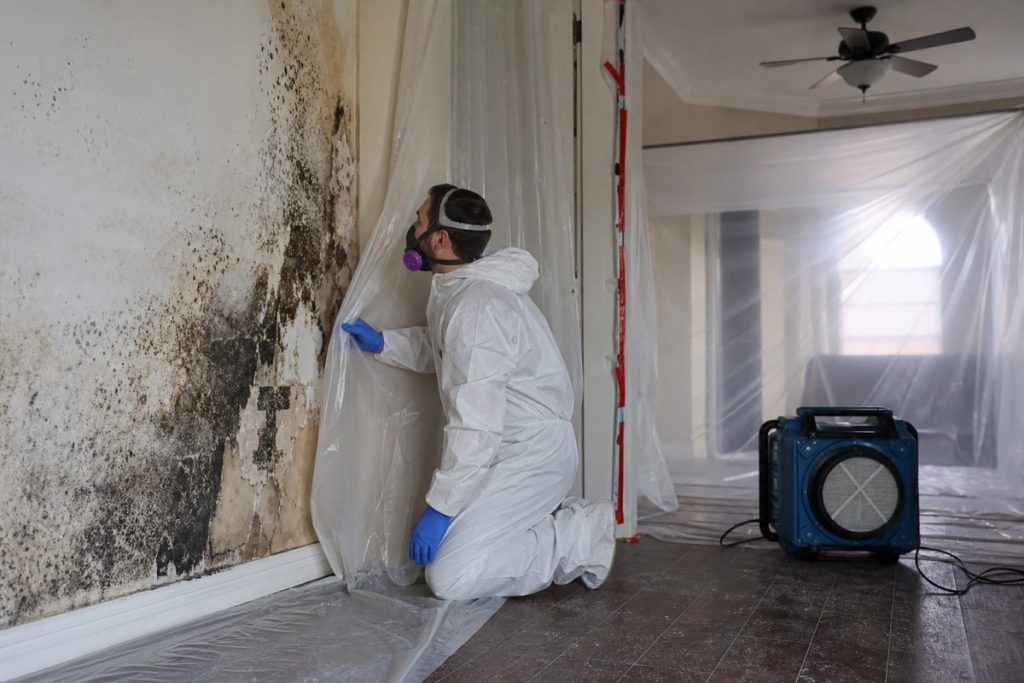
"Mold inspection" and "mold testing" get used as if they were the same thing. They aren't, and knowing the difference can save you a few hundred dollars. An inspection is a visual and moisture investigation: where is it growing, how far does it go, and what water is feeding it. Testing means taking air or surface samples and sending them to a lab. Plenty of Houston homes need the first and not the second. Below: what each involves, when a test is worth paying for, and what mold inspection and testing typically cost.
Who is allowed to do mold assessment in Texas
In Texas, mold assessment for hire is a licensed activity regulated by the Texas Department of Licensing and Regulation (TDLR). A licensed mold assessment consultant is the person who evaluates the problem, writes the remediation protocol that a remediator must follow, and later performs the post-remediation clearance. State rules don't allow the same license holder to perform both assessment and remediation on the same project. In practice that means the assessor you hire has no stake in how big the cleanup is.
Rapid Dry Houston is a referral service, not a mold assessor. Ask any company you speak with for its TDLR license number and check it on TDLR's license search.
What happens during a mold inspection
- History first. Expect questions about past leaks, flooding, AC problems, when the smell started and who in the house has symptoms.
- Moisture mapping. Pin and pinless meters on walls, floors and ceilings, often a thermal camera to spot cool, damp areas, and a hygrometer for indoor humidity.
- Hidden-growth checks where mold usually hides in Houston homes: the attic air handler and drain pan, supply registers and ducts, under sinks, behind baseboards, and in closets on exterior walls.
- Sampling, if it's justified. Air samples (spore traps), with an outdoor sample for comparison, or tape and swab samples from a surface.
- A written report explaining what was found, where the moisture is coming from, and, if remediation is needed, a protocol describing what has to be removed and the clearance criteria.
Do you actually need a mold test?
Federal guidance is blunt about this. The EPA says that in most cases, if visible mold growth is present, sampling is unnecessary, and there are no federal limits for mold spores to compare against. The CDC does not recommend routine sampling either. Testing is worth paying for when:
- You smell mold or have symptoms but can't find any growth, and need to know whether something is hidden in walls or ductwork.
- You're buying or selling and need documentation.
- There's a dispute with a landlord, builder or insurer.
- A remediation has finished and the area needs clearance before it's closed up.
If you can see the mold and you know where the water came from, the next step is fixing the leak and planning removal. A lab report naming the species won't change that plan.
Mold inspection cost and mold testing cost
Prices vary with the size of the house, how many samples are taken and how hard the suspect areas are to reach. Published national cost guides give a reasonable starting point:
| Item | Typical published range | Source |
|---|---|---|
| Professional mold inspection, overall | about $303 to $1,045, average about $671 | HomeAdvisor (2025 data) |
| Inspection with testing, typical home | about $450 to $800, average about $500 | Fixr (updated Jan 2025) |
| Each additional sample beyond the first two | about $60 to $80 | Fixr |
These are national averages, not quotes; Houston prices can land above or below them. What usually pushes the bill up: a large or two-story home, many rooms sampled, an attic or crawl space inspection, and rush lab turnaround. When comparing quotes, ask how many samples are included, whether the report includes a remediation protocol, and whether a post-remediation clearance visit is priced separately.
Is a "free mold inspection" really free?
Be cautious. Since a company that does remediation can't also do the licensed assessment on the same job, a free visit tied to a remediation sales pitch isn't a substitute for an independent assessment. Paying a few hundred dollars for an assessor with nothing to sell is often the cheapest part of the whole process.
What about DIY mold test kits?
Store-bought settle-plate kits almost always grow something, because mold spores are present in nearly every indoor and outdoor air sample. They don't tell you how much is normal, where the source is, or whether you have a problem. If you want data, professional sampling with an outdoor comparison and an accredited lab is the version that means something. If you just want to know whether a wall is wet, an inexpensive moisture meter is more useful than a kit.
After the inspection
If the report says remediation is needed, the protocol becomes the job description for a separate licensed remediation company; see mold remediation in Houston and our mold removal cost guide. If it says the problem is moisture without significant growth, the fix may be as simple as a plumbing repair, a cleared AC drain line and proper drying. For background on what you might be dealing with, see black mold vs. regular mold and is mold in the house dangerous?
Sources: EPA: Mold testing or sampling · TDLR: Mold FAQs · HomeAdvisor: Mold inspection cost · Fixr: Mold inspection cost
Frequently asked questions
How much does a mold inspection cost?
National cost guides put a professional mold inspection at roughly $300 to $1,000, with an average in the $500 to $700 range. Additional lab samples often run about $60 to $80 each. Actual Houston quotes vary with house size and sample count, so compare what's included.
Should I test for mold before buying a house?
If the inspection report mentions past leaks, a musty smell, stained ceilings or flood history, a mold assessment is a reasonable add-on. In Houston, ask the seller about flood history too.
What does an air sample actually tell me?
It compares the types and amounts of spores indoors with an outdoor sample taken at the same time. Indoor levels well above outdoor, or species that are rare outside, point to an indoor source.
How long do mold test results take?
Standard lab turnaround is often a few business days; many labs offer faster results for an extra fee.
Do I need a clearance test after mold removal?
For a licensed remediation project in Texas, the assessment consultant does a post-remediation assessment before the Certificate of Mold Damage Remediation is issued. It's what confirms the job is done before walls are closed up.
Related services
Independent local crews. Ask the right questions.
Independent local companies
Rapid Dry Houston is a referral service. We connect you with independent restoration companies that serve your area; they inspect, quote and do the work.
Check licenses & insurance
Before work starts, ask any crew for proof of insurance and its IICRC certifications (S500 water, S520 mold, S700 fire & smoke). Reputable companies share them gladly.
Get the scope in writing
Ask for a written scope and an itemized estimate before work begins, plus moisture readings that show the structure is actually dry before the job is called done.
Document for insurance
Photos, moisture logs and a line-item estimate in the format adjusters expect keep a claim moving. Ask the crew to provide them, and keep your own photos too.
A Texas note: state law (TDLR) requires mold assessment and mold remediation to be performed by separately licensed companies. An independent assessment protects you from being sold remediation you don't actually need — which is why an honest inspection always comes first.
Not sure whether it's mold?
Call and we'll connect you with an independent mold assessment company that can tell you what's there.