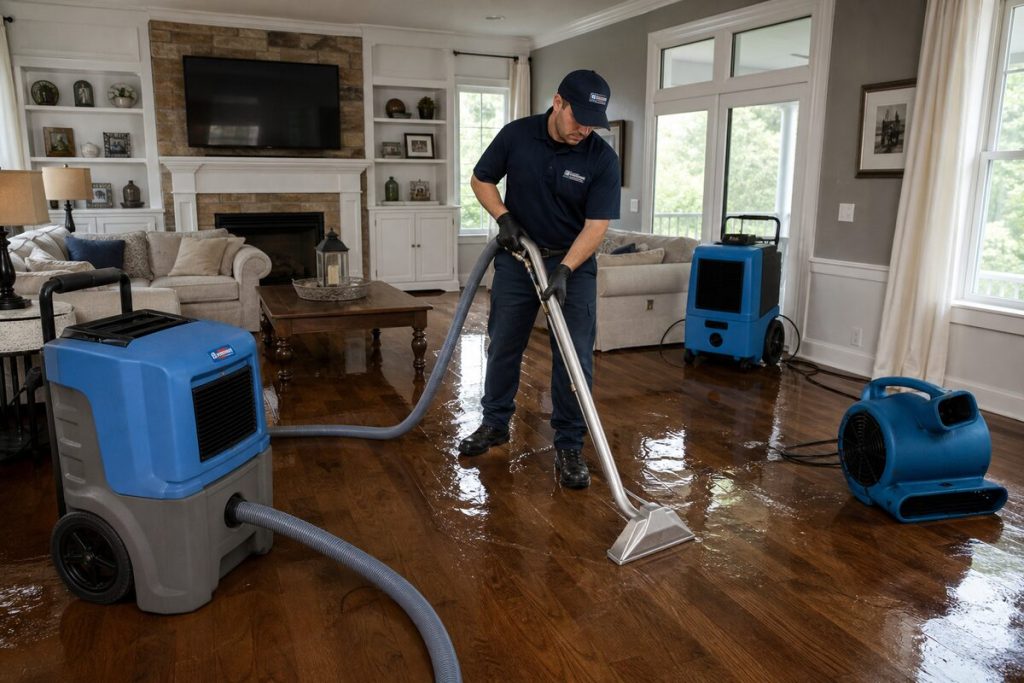
Flood water removal is the process of physically extracting standing water from a home, then drying the structure underneath it — floors, walls, and subfloor — before mold and rot set in. In Houston, where storms, bayou overflow, and burst pipes put water on the floor more often than almost anywhere in the country, how fast you get that water out largely decides how much of your home you keep.
Here’s how flood water removal actually works, what you can safely do yourself, and where a Houston crew has to take over — the urgent first stage of full flood cleanup.
How do you remove flood water from a house?
The job runs in a set order, and skipping steps is what costs people money:
- Make it safe. Never enter standing water near outlets, appliances, or the electrical panel. Treat storm or sewer water as contaminated. If the structure looks unstable, stay out.
- Stop the source. If it’s a pipe, shut off the water main. If it’s water from outside, wait for the level to drop before pumping — pumping against an active flood gets you nowhere.
- Extract the standing water. Submersible pumps for deep water, truck-mounted or portable extractors for the rest. Once it’s more than an inch or two, this step needs real equipment.
- Remove ruined materials. Soaked carpet pad, some drywall, and wet insulation usually can’t be saved and hold water against the structure.
- Dry the structure. Commercial air movers and dehumidifiers pull moisture out of framing, subfloor, and cabinets — the water you can’t see.
- Verify it’s dry. Moisture meters confirm the structure is actually dry, not just dry to the touch.
Why does speed matter so much?
Because the damage compounds by the hour. Water wicks into drywall and subfloor within the first day, and mold can begin growing in about 24–48 hours — faster in Houston’s humidity, per the IICRC S500 water-damage standard. Every hour the water sits, more materials cross from “dry-and-save” to “tear-out-and-replace.” Fast extraction isn’t about convenience; it’s the single biggest lever on your final bill. (Our first-24-hours guide walks the whole timeline.)
Can you remove flood water yourself?
Sometimes — with limits. A small amount of clean water from a supply line, caught immediately, you can mop up and dry with fans. But two things make DIY the wrong call on a real flood:
- Contaminated water. Flood water from outside or a sewer backup carries bacteria and chemicals. That’s a health hazard, not a mopping job — it needs protective gear and disinfection. (Here’s why sewage water is different.)
- Hidden moisture. Home fans and a wet-vac dry surfaces. They do not dry the inside of your walls, under your floors, or behind your cabinets — and that trapped moisture is exactly what turns into mold and warped floors weeks later.
What about the water you can’t see?
This is the part homeowners underestimate. After the visible water is gone, moisture is still sitting inside the structure. Professional water damage cleanup crews use moisture mapping to find it, then set air movers and dehumidifiers in a calculated layout and monitor readings daily until the framing and subfloor hit a dry standard. Skip this and the floor looks fine for a month — then the baseboards swell and the musty smell shows up.
Will insurance cover flood water removal?
It depends on the source. Sudden internal water — a burst pipe, an appliance line, a storm-driven roof leak — is usually covered by a homeowners policy. Rising flood water from outside typically needs separate flood insurance (NFIP), which has a 30-day waiting period, so it has to be in place before the storm. Either way, document everything with photos before cleanup — it’s what keeps a claim clean. (More in our Texas water-damage insurance guide.)
Standing water in your home right now? A Houston crew can start extraction today with commercial pumps and drying gear. Call (713) 422-2550 — answered 24/7.
Frequently asked questions
How do you get flood water out of a house fast?
Make sure it’s safe, stop the source, then extract standing water with pumps and extractors. Once it’s more than an inch or two, a crew with commercial equipment is far faster — and they also dry the structure underneath so mold doesn’t follow.
How long does it take to remove flood water?
Extracting standing water often takes a few hours; fully drying the structure usually takes about 3–5 days with commercial dehumidifiers, depending on how much water soaked in and how humid it is.
Is flood water in my home dangerous?
Yes — flood water from outside or a sewer backup is contaminated and can carry bacteria and chemicals. Don’t wade in or clean it up without protection; it should be handled by a crew with the right gear.
Do I need professional flood water removal, or can I use a wet-vac?
A wet-vac handles a small clean spill. For a real flood it can’t keep up, and it won’t dry inside your walls and subfloor — the hidden moisture that causes mold. That’s why bigger jobs need professional extraction and structural drying.
Water damage in your home right now?
Don't wait for it to spread. Talk to a Houston crew, 24/7.
Call (713) 422-2550More Houston water damage guides
Water spreading right now? Don't wait.
Every hour costs you more in damage. Call now and get a Houston crew moving.