Water Damage Cleanup in Houston: The Process, Step by Step
From the moment the water stops to the day the moisture meter reads dry, this is what a proper cleanup looks like. Call and we'll connect you with an independent Houston restoration company to do it.
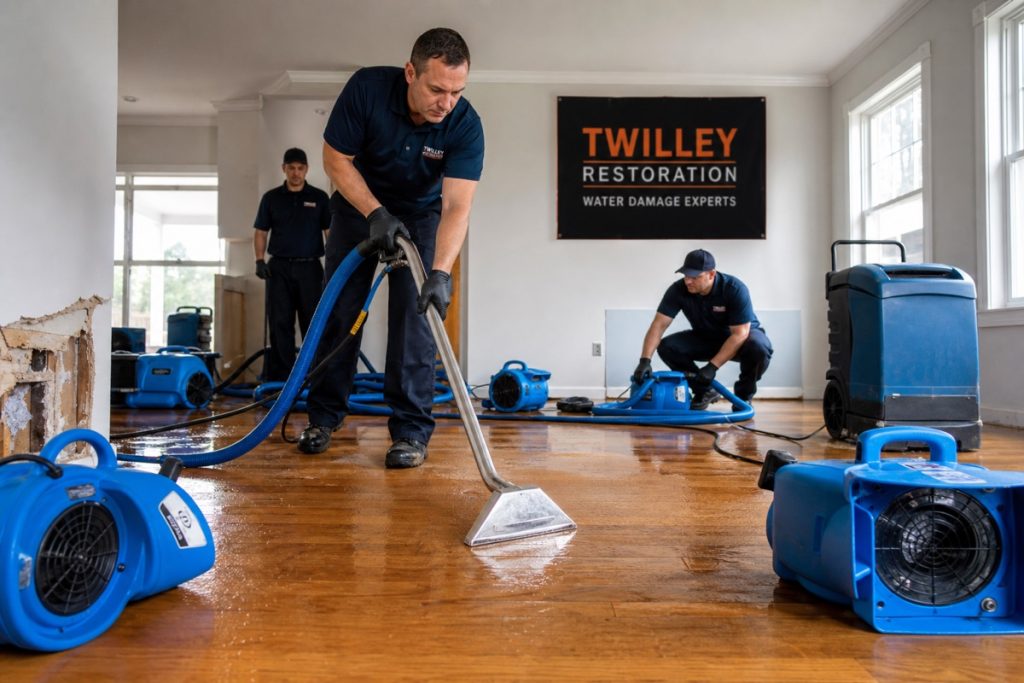
"Cleanup" sounds like mopping. After real water damage it's a sequence of jobs that have to happen in the right order: stop the source, figure out how dirty the water is, get the liquid out, remove what can't be saved, clean and treat what's left, then dry the building and prove it's dry. Skip a step or do them out of order and you end up paying twice, usually because mold shows up behind a wall a few weeks later. Here's how each stage works, what you can safely do yourself, and what to expect from the company you're connected with.
Stage 1: Stop the water and make the house safe
Before any cleanup, the water has to stop. For a burst supply line, that means the main shut-off valve, usually near the street in a ground box or where the line enters the house. For a roof leak, it means a tarp. If water has reached outlets, cords or the electrical panel, turn off the breakers for those areas, but only if you can reach the panel without standing in water. If you can't, wait outside and let a professional or the utility handle it. Many Houston-area homes are built on concrete slabs, so water spreads under baseboards and into neighboring rooms faster than people expect. Check the rooms next to the wet one, not just the room where you saw the water.
Stage 2: Identify what kind of water it is
The industry sorts water into three categories, and the category decides how much has to be thrown away:
- Category 1, clean water: a broken supply line, an overflowing sink of clean water, a leaking water heater. Most materials can be dried in place if work starts quickly.
- Category 2, gray water: dishwasher or washing machine discharge, a toilet overflow with urine but no feces. Carpet pad is usually discarded; other materials are cleaned and treated.
- Category 3, black water: sewage, and floodwater that came in from outside, such as bayou or street flooding. Porous materials it touched (carpet, pad, drywall, insulation) are removed, not cleaned.
Clean water doesn't stay clean. After a day or two in a warm house it picks up bacteria from the floor and materials it soaks through, so a Category 1 loss can become Category 2 if cleanup is delayed. There's a full explanation in our guide to water damage categories.
Stage 3: Remove the standing water
Getting liquid water out is the fastest, cheapest part of drying, because pulling water out with a vacuum takes far less time and energy than evaporating it later. Crews use truck-mounted or portable extractors, and pumps where water is deep. On carpet, weighted extraction tools squeeze water out of the pad. This step is covered in more detail on our water extraction page.
Stage 4: Tear out what can't be saved
This is the stage most homeowners don't expect. Depending on the water category and how long things stayed wet, a crew may:
- Pull carpet pad (and sometimes the carpet) and cut it into manageable pieces.
- Remove baseboards so the wall bottoms can breathe and be checked.
- Make a "flood cut": removing drywall in a straight line above the wet line, often at 2 or 4 feet, so the wet insulation and framing behind it can be removed or dried.
- Remove swollen particleboard cabinet bases, laminate flooring that has cupped, or wet insulation.
Every removed item should be photographed and measured before it goes in the dumpster. Your adjuster will want to see the damage, and the photos and measurements are your evidence. A good crew documents this as they go; ask for the photos.
Stage 5: Clean and treat what stays
Exposed framing, slab, subfloor and any salvageable surfaces are cleaned. After Category 2 or 3 water, they're treated with an antimicrobial product registered for that use. In Houston's humid climate this step matters more than in drier cities, because mold spores are already everywhere and only need moisture and time. Cleaning doesn't replace drying, though. A treated wall that stays wet will still grow mold.
Stage 6: Dry it and prove it's dry
Once the wet materials are out and the rest is clean, air movers and dehumidifiers run, usually for several days, while a technician takes moisture readings each visit. The equipment stays until the readings show materials are back to normal for your home, not until the surface feels dry to the touch. The science behind this is explained on our structural drying page.
What about your belongings?
Furniture sitting in water should be lifted onto blocks or aluminum foil right away to stop wood legs from wicking water and staining carpet. Move rugs, paper, photos and electronics out of wet rooms. Books and photos can be frozen in sealed bags to stop mold until they can be professionally dried. If the water was Category 3 floodwater, soft items like mattresses, upholstered furniture and stuffed toys that were soaked usually can't be saved safely. Photograph them and list them before disposal.
What you can do before help arrives (and what you shouldn't)
Safe: shut off the water, take photos and video, move valuables, open interior doors, run the AC to help pull humidity down, mop up small amounts of clean water, and call your insurer to open a claim.
Avoid: using a household vacuum on wet floors (it's an electrical hazard), walking through water near powered outlets, turning on ceiling lights or fans in rooms where the ceiling is wet or sagging, and wading through floodwater or sewage without boots and gloves. Don't start throwing out drywall or flooring before it's been documented.
How long cleanup takes and what drives the cost
A small clean-water loss in one room might be extracted and drying the same day, with equipment out in three to five days. A whole-house flood can take weeks before rebuilding even starts. Cost depends mostly on square footage, water category, how much material has to come out, and how many days the drying equipment runs. Our guide to water damage restoration costs in Houston breaks down typical ranges. Once cleanup is finished, putting the house back together (drywall, flooring, paint) is a separate phase covered under water damage repair.
Choosing who does the cleanup
When you call (713) 422-2550, we connect you with an independent local restoration company. We don't do the work ourselves. Before they start, ask for proof of insurance, whether their technicians hold IICRC Water Damage Restoration Technician certification, and for a written estimate. Ask how they'll document the job for your insurer. Many companies inspect at no charge, but confirm that on the phone.
Frequently asked questions
Can I clean up water damage myself?
A small amount of clean water caught quickly, on a hard floor, with no wet drywall, can often be handled with a wet vac, fans and the AC. Once water has soaked into carpet pad, wall cavities, or cabinets, or if it's gray or black water, professional extraction and moisture monitoring are usually worth it, because hidden moisture is what causes mold later.
Do I need to throw out wet drywall?
Not always. Drywall soaked by clean water for a short time can often be dried in place. Drywall touched by sewage or outside floodwater, drywall that has swollen or crumbled, or walls with wet insulation behind them are usually cut out. Moisture readings, not appearance, should decide.
Should I run my air conditioning during water damage cleanup?
Usually yes, if the system and ducts weren't flooded. AC removes humidity from the air, which helps drying. If water got into the air handler or the ducts, or if the water was sewage, keep it off until it's checked, so you don't spread contamination.
What happens to the carpet after a leak?
With clean water caught early, the carpet can often be extracted, lifted and dried, with only the pad replaced. With gray water, the pad is replaced and the carpet cleaned. With sewage or floodwater from outside, both carpet and pad are normally removed.
Will insurance pay for water damage cleanup?
Sudden and accidental water, like a burst pipe, is commonly covered by Texas homeowners policies, while rising floodwater requires a separate flood policy and slow long-term leaks are often excluded. See our guide to homeowners insurance and water damage in Texas.
Related services
Independent local crews. Ask the right questions.
Independent local companies
Rapid Dry Houston is a referral service. We connect you with independent restoration companies that serve your area; they inspect, quote and do the work.
Check licenses & insurance
Before work starts, ask any crew for proof of insurance and its IICRC certifications (S500 water, S520 mold, S700 fire & smoke). Reputable companies share them gladly.
Get the scope in writing
Ask for a written scope and an itemized estimate before work begins, plus moisture readings that show the structure is actually dry before the job is called done.
Document for insurance
Photos, moisture logs and a line-item estimate in the format adjusters expect keep a claim moving. Ask the crew to provide them, and keep your own photos too.
Need water damage cleaned up in Houston?
Call and we'll connect you with an independent local company that can start the cleanup.