Emergency Water Removal & Water Extraction in Houston
Standing water on the floor, soaked carpet, water in the garage or under the kitchen sink? Call and we'll connect you with an independent Houston company that has the pumps and extractors to get it out.
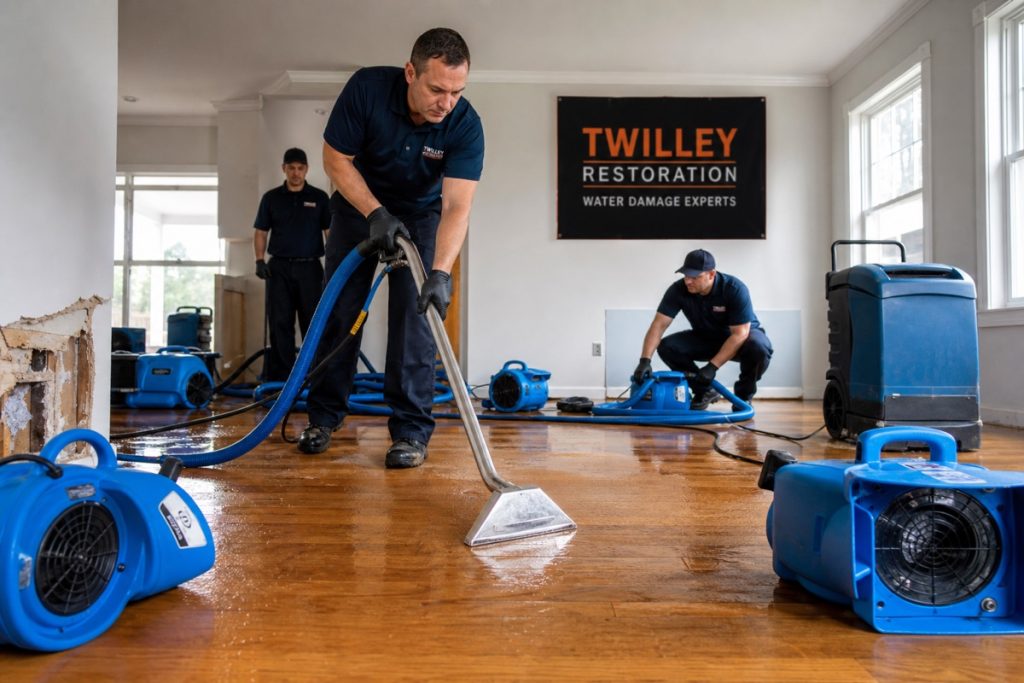
Water extraction is the emergency part of a water damage job: physically pulling liquid water out of the house before it soaks deeper into the slab, subfloor, drywall and cabinets. It matters more than any other single step, because every gallon removed as liquid is a gallon that doesn't have to be evaporated by dehumidifiers over the following days. Fast, thorough extraction usually means a shorter drying time, less material torn out, and a smaller bill.
Emergency water removal: what to do in the next 30 minutes
- Stop the source. Close the main water valve, or the valve on the appliance or toilet that's leaking. If it's a water heater, turn off its cold supply valve and its power or gas.
- Kill the power to wet areas at the breaker panel, if you can get there without standing in water.
- Lift and move. Get electronics, rugs, paper and anything with wooden legs off the wet floor. Slide foil or plastic lids under furniture legs.
- Take photos and video of the water before any of it is removed. That's the best proof of how bad it was.
- Don't use a household vacuum on wet floors. A shop vac rated for water is fine for small amounts of clean water.
Water extraction services: how professional water removal works
The equipment depends on how much water there is and where it is:
| Situation | Typical equipment |
|---|---|
| Inches of standing water across a slab floor | Submersible pumps to move bulk water, then extractors to pull the remaining film. |
| Wet carpet and pad | Truck-mounted or portable extractors, plus weighted or ride-on extraction tools that press water out of the pad. |
| Hardwood floors | Floor drying mats or panels that pull water up through the boards' seams under suction. |
| Water inside wall or cabinet cavities | Small holes drilled behind baseboards or toe kicks to drain and ventilate the cavity. |
| Commercial spaces and large floors | Larger truck-mounted units and multiple pumps working at once. |
Truck-mounted extractors are powerful and discharge the water to the truck, which helps when power in the house is off or unsafe. Portable units are used in high-rise condos and apartments where hoses can't reach. After extraction, a technician will check the slab, walls and baseboards with a moisture meter and a thermal camera to find where the water travelled, which is often further than the visible puddle.
Why emergency water extraction can't wait in Houston
Three things work against you here. First, the humidity: outdoor air in Houston is often so humid that opening windows doesn't help drying and can make it worse. Second, the heat: warm, wet materials let bacteria and mold grow faster, and clean water picks up contamination over time. Third, the slab: many Houston-area homes sit on concrete slabs, and water that sits on a slab spreads under walls into neighboring rooms and soaks into the bottom of drywall and baseboards. Getting the water off the floor within the first hours limits all three.
When the water isn't clean
If the water came from a sewer backup, a toilet with waste in it, or floodwater that came in from the street or a bayou, extraction is done with protective equipment and the water is treated as contaminated. Porous materials it touched are usually removed rather than dried. If that's your situation, see our sewage backup cleanup page or, for rising water from outside, flood cleanup in Houston.
What happens after extraction
Extraction removes the liquid water; it doesn't dry the building. Water already absorbed into drywall, framing, cabinets and the slab has to be dried out with dehumidifiers and air movers over several days, with daily moisture readings. That's structural drying. If you want to see how extraction fits into the whole job from start to finish, read our step-by-step water damage cleanup page.
Common emergencies that need water removal
- Burst pipes, especially in attics and exterior walls during hard freezes like February 2021. See burst pipe water damage.
- Water heater failures: tanks in garages, closets and attics can release their full contents in minutes.
- Washing machine and dishwasher hoses, ice-maker lines and refrigerator leaks. See appliance leak water damage.
- AC condensate overflow from an attic air handler, which often shows up as a stain or drip through the ceiling.
- Storm water from roof leaks or water pushed in under doors during heavy rain.
Who you'll be talking to
We're a referral service, not a restoration company. When you call (713) 422-2550, we connect you with an independent local company that offers emergency water removal. Many work around the clock, but availability varies, especially after a big storm when every company in the region is busy. When they arrive, ask for proof of insurance and whether their technicians are IICRC-certified in water damage restoration, and ask them to photograph the water and their moisture readings before and after extraction for your insurance claim.
Frequently asked questions
How fast should water be extracted?
As soon as safely possible, ideally within the first few hours. Within 24 to 48 hours, materials soak deeper, clean water starts to pick up bacteria, and conditions for mold growth develop, especially in Houston's heat and humidity.
Can I use a shop vac instead of calling a professional?
For a small amount of clean water on a hard floor, yes. A shop vac can't pull water out of carpet pad, wall cavities or under flooring, and it can't tell you where water travelled. For anything beyond a small puddle, professional extraction and moisture readings are usually worth it.
How much does emergency water extraction cost?
It depends on the square footage, the water category and whether extraction is part of a larger mitigation job. Ask for an estimate before work starts. Our Houston restoration cost guide covers typical ranges.
Is my carpet ruined once it's soaked?
Not necessarily. After a clean-water leak, extracted quickly, the carpet can often be dried and saved, with only the pad replaced. After sewage or outside floodwater, carpet and pad are normally removed.
Will extraction alone fix the problem?
No. Extraction removes liquid water from surfaces. Water already absorbed into walls, framing, cabinets and the slab still needs dehumidification and monitoring until it's dry, or mold and odors can follow.
Related services
Independent local crews. Ask the right questions.
Independent local companies
Rapid Dry Houston is a referral service. We connect you with independent restoration companies that serve your area; they inspect, quote and do the work.
Check licenses & insurance
Before work starts, ask any crew for proof of insurance and its IICRC certifications (S500 water, S520 mold, S700 fire & smoke). Reputable companies share them gladly.
Get the scope in writing
Ask for a written scope and an itemized estimate before work begins, plus moisture readings that show the structure is actually dry before the job is called done.
Document for insurance
Photos, moisture logs and a line-item estimate in the format adjusters expect keep a claim moving. Ask the crew to provide them, and keep your own photos too.
Standing water in your Houston home right now?
Call and we'll connect you with an independent local company for emergency water removal.