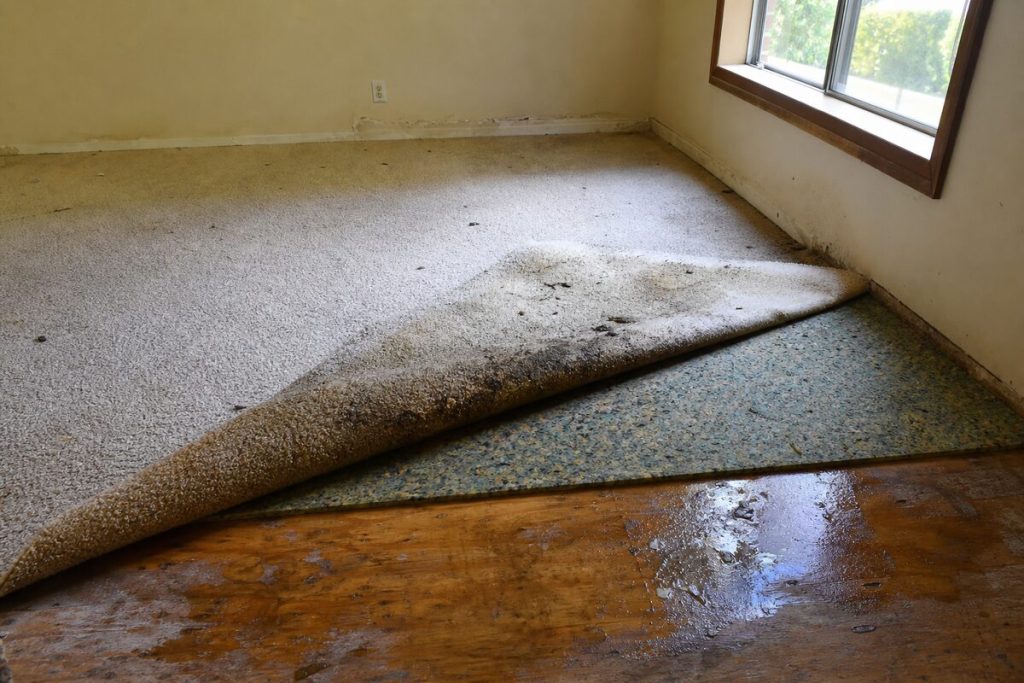
Whether wet carpet can be saved after a flood depends on two things: what kind of water soaked it, and how long it stayed wet. Carpet soaked by clean water (a supply line, an overflowing sink, rain through a window) that’s extracted and dried within 24–48 hours can often be saved, though the pad underneath is usually replaced. Carpet soaked by floodwater from outside or by sewage should be thrown out along with its pad. The CDC lists carpet and padding among the items to discard after a flood when they can’t be cleaned and dried quickly.
Quick decision guide
| Water source | Wet less than ~48 hours | Wet longer than ~48 hours |
|---|---|---|
| Clean: supply line, ice maker, rain through a window (Category 1) | Carpet often saved; pad often replaced | Likely replace; check for odor, mold and delamination |
| Gray: washer or dishwasher discharge, AC overflow, clean water that sat (Category 2) | Carpet may be cleaned and saved after professional extraction and treatment; pad replaced | Replace carpet and pad |
| Black: bayou or street flooding, sewage backup (Category 3) | Replace carpet and pad | Replace carpet and pad |
Clean water doesn’t stay clean. After a day or two in warm conditions, it picks up bacteria from the carpet, pad and floor. Our water damage categories guide explains the IICRC Category 1–3 system restoration companies use.
Why the pad usually goes
Carpet pad is open-cell foam that soaks up water and holds it against the floor. The carpet surface can feel dry while the pad underneath stays saturated, keeping the slab or subfloor wet and growing mold out of sight. Pad is also cheap compared to carpet, so replacing it is usually the sensible call even after a clean-water leak.
How to dry wet carpet
These steps are for carpet wet with clean water. Carpet soaked by floodwater or sewage should be removed, not dried.
- Stop the water and cut the power to anything plugged in near the wet area.
- Extract. Make slow, overlapping passes with a wet/dry vac or a rented extraction wand until it pulls up very little water. Extraction removes far more water than fans ever will.
- Lift the carpet. Use pliers to pull it off the tack strip at a corner, fold it back, and cut out and remove the wet pad.
- Get air under it. Point fans (ideally air movers) underneath the lifted carpet so it “floats,” and across the exposed floor.
- Dehumidify. Close the room, run a dehumidifier and keep the AC on. In Houston’s climate, an open window usually adds moisture rather than removing it.
- Check the floor. A concrete slab holds moisture for a long time; plywood subfloors in pier-and-beam homes can swell. Use a moisture meter, and don’t reinstall until readings match a dry area of the house.
- Re-stretch and reinstall over new pad once everything is dry, and treat or replace soaked tack strip.
The EPA’s mold guidance for wet carpet is the same idea: extract the water, lower the humidity with a dehumidifier, and speed up drying with fans, all within 24–48 hours.
Signs the carpet didn’t really dry
- A musty or sour smell that returns on humid days;
- Brown rings or stains wicking up from the backing (“browning”);
- Ripples, bubbles or soft spots, which can mean the backing is separating from the face fibers (delamination);
- Swollen or cupped baseboards and the bottom edges of walls;
- Allergy-type symptoms that get worse in that room.
Any of these means moisture is still trapped, usually in the pad, the tack strip or the wall bottoms. Pulling the carpet back for a look settles it. If you see mold growth across a large area, the EPA suggests professional help for anything over about 10 square feet.
After a Houston flood: what to expect
If street or bayou water came into the house, expect wall-to-wall carpet and pad to go to the curb. Restoration crews cut the carpet into strips so it can be carried out, pull the tack strip, clean and disinfect the slab, and then dry the slab and wall bottoms with air movers and dehumidifiers. Area rugs soaked in floodwater can sometimes be saved by a specialist rug cleaner if they’re valuable; most aren’t worth the cost.
For insurance, photograph the carpet before it’s removed, note the brand and style if you know it, and keep a hand-sized sample of carpet and pad for the adjuster. Flood policies and homeowners policies handle flooring differently. See our Texas water damage insurance guide.
When to call for help
Call a professional if more than one room is wet, if the water was gray or black, if it has been wet more than a day, or if you can’t get moisture readings down. Truck-mounted water extraction pulls much more water from carpet than a shop vac, which shortens drying time and gives the carpet a better chance.
Carpet soaked right now? The first day matters most. Call (713) 422-2550 and we’ll connect you with an independent Houston restoration company for extraction and drying.
Frequently asked questions
Can carpet be saved after a flood?
If the water was clean and the carpet is dried within about 24–48 hours, often yes, though the pad is usually replaced. Carpet soaked by outside floodwater or sewage should be discarded with its pad.
How long does wet carpet take to dry?
It depends on how much water, the humidity, and the equipment. With strong extraction, the pad removed and professional air movers and dehumidifiers, clean-water carpet often dries in a few days. With box fans alone, it may never fully dry underneath.
Can I just use fans to dry wet carpet?
Fans alone rarely get the pad and floor dry, especially in Houston’s humidity. Extract the water first, pull the wet pad, run a dehumidifier, and then use fans under the lifted carpet.
Will wet carpet grow mold?
It can, especially if the pad or floor stays wet for more than a day or two. The EPA advises drying wet carpet within 24–48 hours.
Should I keep a piece of my flooded carpet?
Yes. Photograph it in place and keep a small sample of carpet and pad so your adjuster can match quality and price.
Sources: CDC: Cleaning safely after a disaster · EPA: Mold remediation guide (water damage response table) · EPA: Mold, Moisture and Your Home
Water damage in your home right now?
Don't wait for it to spread. Call and we'll connect you with an available local company.
Call (713) 422-2550More Houston water damage guides
Water spreading right now? Don't wait.
Every hour costs you more in damage. Call now and we'll connect you with a local crew.