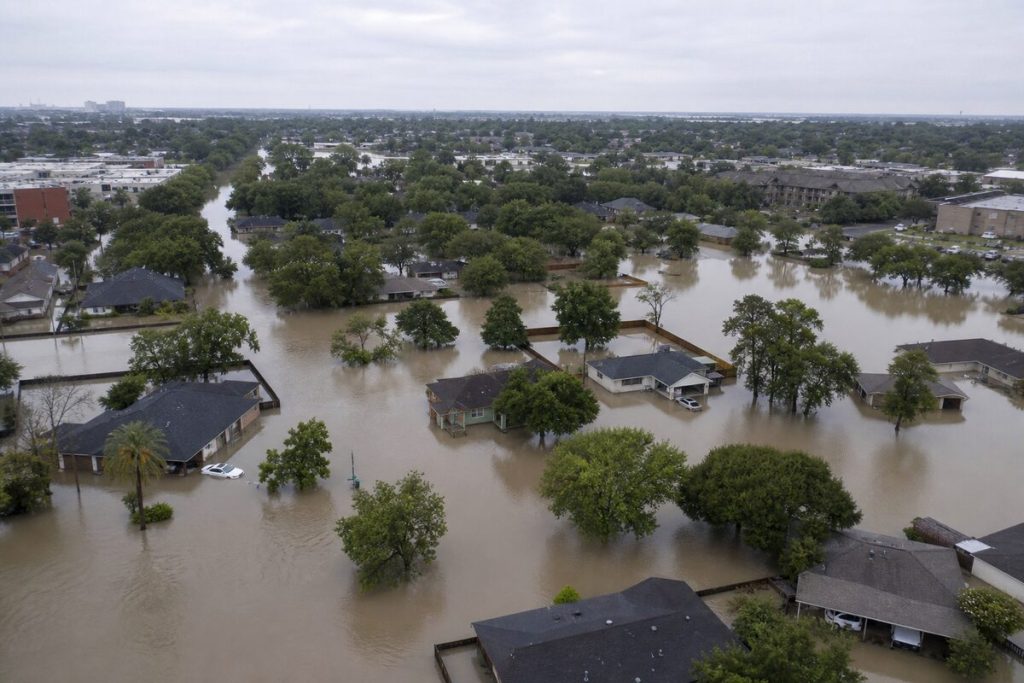
Houston floods so often because of a hard combination: flat land, clay soil that barely absorbs water, a slow-draining bayou system, some of the heaviest rainfall in the country, and decades of development that replaced prairie with concrete. No single one of these would do it — together they make the Houston area one of the most flood-prone places in the United States.
Here’s what’s actually going on, and why even homes far from a bayou end up with water inside.
Is Houston built on a floodplain?
Effectively, yes. Houston sits on a flat coastal plain only about 50 feet above sea level, on heavy clay soil — the local “gumbo” — that absorbs water slowly. Rain that would soak into sandy ground elsewhere pools and runs off here instead. With almost no natural slope, that water has nowhere to go quickly.
Why doesn’t the water drain away?
Houston drains through a network of bayous — Buffalo, Brays, White Oak, Greens, and others — that carry runoff toward the ship channel and Galveston Bay. In an ordinary rain they cope. In a major storm they fill and overflow, and because the land is so flat, water backs up into neighborhoods well away from the bayou itself. Harris County maintains thousands of miles of channels precisely because drainage is the whole battle here.
How much rain does Houston actually get?
A lot, and often all at once. The area averages around 50 inches of rain a year, and a single tropical system can drop a year’s worth in days. Hurricane Harvey (2017) poured more than 50 inches in spots — a U.S. rainfall record — and flooded an estimated 150,000+ homes across the region, many that had never flooded before. (Source: Harris County Flood Control District and the National Weather Service.)
Does new construction make flooding worse?
It contributes. Every subdivision, parking lot, and road that replaces open prairie adds impervious cover — surface that sheds water instead of absorbing it — so more runoff reaches the bayous faster. Add gradual land subsidence (ground sinking from decades of groundwater pumping) in parts of the region, and some areas flood more easily than they did a generation ago.
What does this mean for my home?
Two things. First, “I’m not in a flood zone” doesn’t mean safe — a large share of Houston flood damage happens outside mapped high-risk zones. Second, when water does get in, speed is everything: in our humidity, mold can start within 24–48 hours, so extraction and drying can’t wait. (If it’s already happening, here’s what to do in the first 24 hours and how flood water removal works.)
Water in your home after a Houston storm? Don’t wait for it to spread. Call (713) 422-2550 — a local crew answers 24/7 and can start flood cleanup today.
Frequently asked questions
Why does Houston flood so easily?
A flat, clay-soil coastal plain that absorbs water slowly, a bayou system that overflows in big storms, extreme rainfall, and lots of concrete from development — together they make water pool and back up into homes.
Is my Houston home at risk if it’s not in a flood zone?
Yes. A large share of Houston flood damage happens outside mapped high-risk flood zones, especially in extreme rain events, so being “out of the zone” is not a guarantee.
What should I do if my house floods in Houston?
Safety first, stop the source if it’s plumbing, document the damage with photos, then get professional extraction and drying started fast — the mold clock is 24–48 hours.
Does Houston flood more than it used to?
In some areas, yes — added impervious cover from development and land subsidence in parts of the region mean water runs off faster and pools where it once soaked in.
Water damage in your home right now?
Don't wait for it to spread. Talk to a Houston crew, 24/7.
Call (713) 422-2550More Houston water damage guides
Water spreading right now? Don't wait.
Every hour costs you more in damage. Call now and get a Houston crew moving.