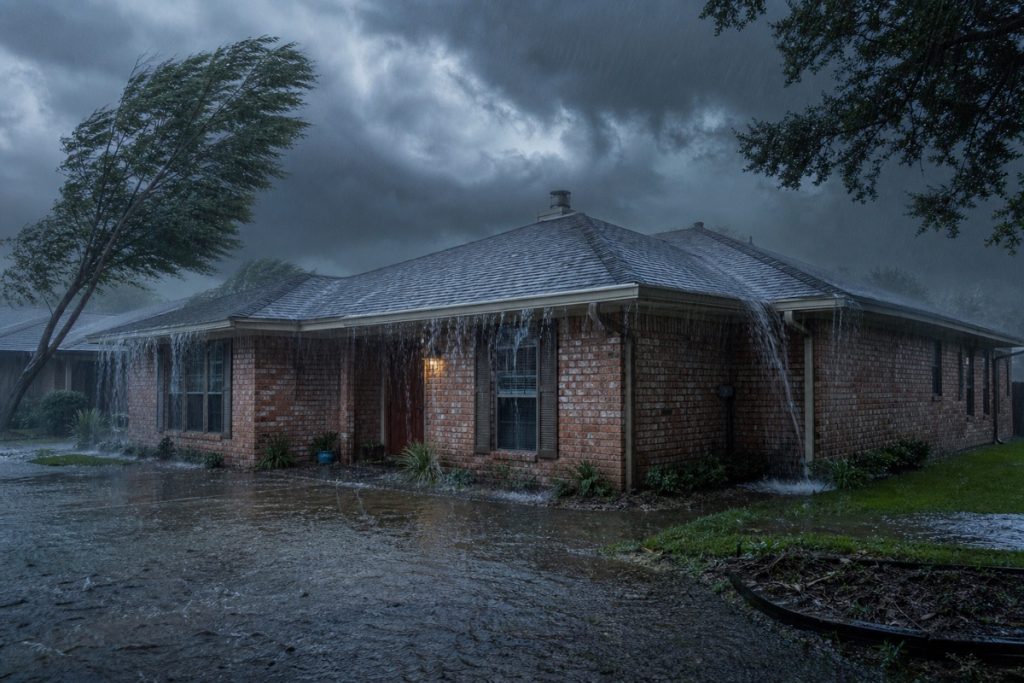
Houston’s hurricane season runs June through November, and every year homes flood that didn’t have to. You can’t stop a hurricane, but you can meaningfully cut your odds of major water damage — and the difference usually comes down to a handful of unglamorous things done ahead of time. Here’s the practical version, no filler.
Before the season starts
These are the jobs to do in the calm months, because you can’t do them well once a storm is in the Gulf:
- Clear your gutters and downspouts. Clogged gutters send water over the sides and down against the foundation and walls — a common, preventable source of water intrusion. Make sure downspouts carry water away from the house.
- Check and reseal your roof. Most storm water gets in through the roof, not the doors. Look for lifted, cracked, or missing shingles and questionable flashing around vents and chimneys, and fix them before the wind finds them. (When it does get in, that’s the storm and hurricane damage we deal with.)
- Know where your water main shut-off is. If a storm damages plumbing, you want to stop it fast without hunting for the valve in the dark.
- Photograph your home and belongings now. Room by room, for insurance. Store the photos in the cloud so they survive even if the house doesn’t.
- Check your flood insurance — this is the big one. Standard homeowners insurance does not cover rising water, and flood policies commonly have a 30-day waiting period before they take effect. That means buying a flood policy as a storm approaches is too late. If you’re in or near a flood-prone area of Houston and you don’t have flood coverage, handle it early in the season, not when the forecast turns. (Here’s more on why flood water is treated differently once it’s inside.)
When a storm is on the way
Once there’s a named storm headed toward the Gulf:
- Move valuables and electronics up off the floor and away from windows. Get important documents into a waterproof container or up high.
- Clear the yard. Anything that can block a storm drain, or become a projectile, goes inside or gets secured. Clogged drains turn a rainstorm into a flood.
- Charge everything and set aside flashlights and batteries — you want to be able to see and communicate if the power goes.
- Fill sandbags or place barriers at low doorways if your home has taken water before.
- Know your plan. If your area floods, decide in advance when you’d leave — don’t make that call in rising water.
After the storm passes
This is where the money is won or lost:
- Safety before cleanup. Don’t enter standing water near electrical lines or panels. Treat floodwater as contaminated — it usually is. Watch for structural damage before going back in.
- Document before you touch anything. Photos and video of every affected area, before you move or discard a single item. Same rule as any flood: the claim is built on evidence.
- Call for extraction early — this is the insight most guides skip. After a major storm, every restoration crew in Houston gets slammed at once. The homeowners who call early get on the schedule and get dried out fast; the ones who wait sit in a wet house for days while mold takes hold. Getting in line early is itself a way to prevent damage.
The one move that saves the most money
If there’s a single theme to all of this, it’s speed — both before and after. Before the storm, the prep that prevents water from getting in. After the storm, getting water out before it soaks in and molds. The homeowners who come through hurricane season with the least damage aren’t lucky. They cleared their gutters in May, bought the flood policy in June, and had a crew drying their home the morning after the storm instead of a week later.
You can’t control the weather. You can control your roof, your drainage, your insurance timing, and how fast you move when it’s over — and those four things are most of the difference between a scare and a disaster.
Storm already got water into your home? Get a crew out early — before the rush. Call (713) 422-2550, answered 24/7. See also: Storm & Hurricane Damage.
Frequently asked questions
How do I protect my Houston home from hurricane water damage?
Before the season: clear gutters, reseal the roof, and secure flood insurance early. Before a storm: move valuables up, clear drains, and prepare to leave if needed. After: document and call for extraction early.
Does homeowners insurance cover hurricane flooding?
No — rising water needs a separate flood insurance policy, which often has a 30-day waiting period, so it must be in place well before a storm.
What causes the most water damage in a hurricane?
Roof intrusion and outside flooding. A well-sealed roof and good drainage prevent a large share of it.
Why call a restoration crew early after a storm?
Crews book up fast after major storms. Calling early gets you on the schedule and drying started before mold sets in, while others wait days.
—
All five posts are written to be genuinely more useful than the thin, national content currently ranking — Houston-specific, honest, action-first, and internally linked to the matching service pages. Publish one per week after the 15 core pages are live. Add real photos (before/after, crew at work) and the cost/timeline graphics noted in each plan to strengthen engagement and E-E-A-T.
Water damage in your home right now?
Don't wait for it to spread. Talk to a Houston crew, 24/7.
Call (713) 422-2550Water spreading right now? Don't wait.
Every hour costs you more in damage. Call now and get a Houston crew moving.