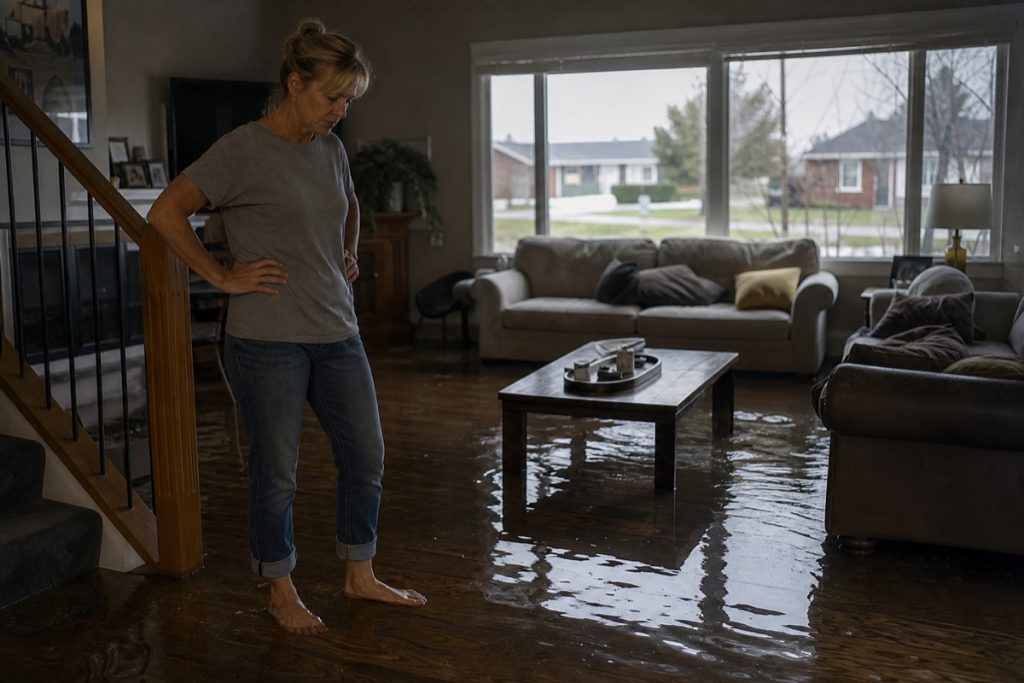
When your house floods, the first 24 hours come down to two things: keeping everyone safe, and recording the damage before anything is cleaned or thrown out. Get those right and the drying, the insurance claim and the repairs all go more smoothly. Below is a timeline you can follow even when it’s hard to think clearly. The physical cleanup steps are in a separate guide on how to remove flood water from your house.
Hour 0–1: Make it safe
If water is still rising
Get people and pets to higher ground and call 911 if anyone is trapped. Don’t drive or walk through moving water. The National Weather Service warns that 6 inches of fast-moving water can knock over an adult and 12 inches can carry away most cars. In Houston, underpasses and low freeway frontage roads fill fastest.
Before you go back inside
- Power. If water touched outlets, the panel or appliances, stay out of the water. Switch off the main breaker only if you can reach it while standing somewhere dry. Otherwise, ask CenterPoint Energy (or your electric utility) to disconnect at the meter. Have an electrician check flooded circuits before the power goes back on.
- Gas. If you smell gas or hear hissing, leave right away and call the gas company from outside.
- Structure. Sagging ceilings, bulging walls or floors that feel spongy mean stay out.
- Wildlife. Floods push snakes and floating clumps of fire ants into garages and homes in southeast Texas. Look before you reach into piles or under furniture.
- Protective gear. Wear waterproof boots, rubber gloves and eye protection. Floodwater from outside or from a sewer is contaminated. Keep children out of it entirely.
Hour 1–3: Stop the source and protect what you can
- Inside water (pipe, water heater, appliance): shut off the main water valve. In most Houston homes it’s near where the line enters the house, or at the curb box by the meter.
- Outside water: wait for it to recede before pumping. Pumping against a rising flood doesn’t help.
- Move valuables up: documents, medicine, photos, electronics. Put furniture legs on blocks or foil so the wood doesn’t wick up water.
- Don’t run the AC or furnace if water reached the air handler or ducts.
- Generator safety: if the power is out, keep any generator outside and at least 20 feet from doors and windows, as the CDC advises. Carbon monoxide poisoning is a common post-storm injury in Texas.
Hour 2–6: Document everything before cleanup
Insurance claims are paid on evidence. This is the step people skip, and the one they regret most.
- Video walk-through. Narrate as you go: room name, what happened, what’s damaged. Open cabinets and closets.
- Photograph the waterline on walls, cabinets and appliances, with a tape measure in the frame showing the height from the floor.
- Close-ups of model and serial plates on the water heater, HVAC, washer, dryer, fridge and TVs.
- Keep samples, like a hand-sized piece of carpet and pad, and a piece of any custom flooring or trim, so the adjuster can price replacements.
- Don’t throw out large items yet unless they’re a health hazard. If you must, photograph them first. Your insurer may want to inspect them.
- Write a running log with the date and time water entered, its source, how deep it got, and every call you make.
Store everything in the cloud (email it to yourself if nothing else) so it survives if your phone doesn’t.
Hour 3–8: Make the right calls
| Who | Why |
|---|---|
| Your insurer(s) | Report the loss and get a claim number. Rising water from outside goes to your flood policy (NFIP or private). Sudden internal water like a burst pipe usually goes to homeowners. You may have both claims. |
| Your mortgage servicer | Insurance checks for structural damage are often made out to both you and the lender. |
| A restoration company | To begin extraction and drying. Ask for written moisture readings and photos; they support your claim. |
| Landlord (if renting) | Notify them in writing. Your renters policy covers your belongings, but usually not flood damage unless you added flood coverage. |
| FEMA (if a disaster is declared) | Register at DisasterAssistance.gov. Grants can help with uninsured losses. |
NFIP policyholders generally have 60 days from the loss to file a signed Proof of Loss, and that deadline can be extended after large disasters. Read the claim steps in our guide on filing a water damage claim in Texas, and know what an assignment of benefits means before you sign one.
Hour 6–24: Start drying
The EPA advises drying water-damaged materials within 24–48 hours to prevent mold growth, and Houston’s humidity leaves little room for delay. By the end of day one you want:
- standing water out;
- soaked carpet pad and anything else that can’t be saved pulled, photographed and set aside;
- dehumidifiers and air movers running, with readings taken.
After a regional flood, every crew in Houston fills its schedule quickly. Calling early is a big part of what keeps a wet house from becoming a moldy one. (See what’s involved in flood cleanup.) Wondering how long the whole process will take once drying starts? See how long water damage restoration takes.
What not to do in the first 24 hours
- Don’t wade through water near electrical equipment.
- Don’t clean before you document.
- Don’t throw away the samples your adjuster will need.
- Don’t sign broad contracts or pay large deposits on the spot because someone is at your door.
- Don’t assume it’s minor because the floor looks dry. Water wicks up into walls and under cabinets.
Need help started today? Call (713) 422-2550 and we’ll connect you with an independent Houston restoration company for extraction and drying.
Frequently asked questions
What is the first thing to do when your house floods?
Make sure everyone is safe. Stay out of water near electricity, get to higher ground if water is still rising, and call 911 if anyone is in danger. Damage control comes after that.
Should I turn off the electricity if my house floods?
Only if you can reach the main breaker while standing somewhere dry. If not, ask your utility to disconnect at the meter, and have an electrician inspect before the power is restored.
What photos does insurance need after a flood?
A narrated video of every room, the waterline with a tape measure in the frame, close-ups of damaged items and appliance model and serial plates, and samples of flooring. Take them all before cleanup.
Does homeowners insurance cover a flooded house?
Not for rising water from outside. That needs a flood policy. Sudden internal water, like a burst pipe, is usually a homeowners claim.
How soon should drying start after a flood?
As soon as it’s safe. The EPA advises drying wet materials within 24–48 hours to prevent mold, and in Houston’s humidity sooner is better.
Sources: NWS: Turn Around, Don’t Drown · CDC: Cleaning safely after a disaster · FloodSmart (NFIP) · DisasterAssistance.gov
Water damage in your home right now?
Don't wait for it to spread. Call and we'll connect you with an available local company.
Call (713) 422-2550More Houston water damage guides
Water spreading right now? Don't wait.
Every hour costs you more in damage. Call now and we'll connect you with a local crew.