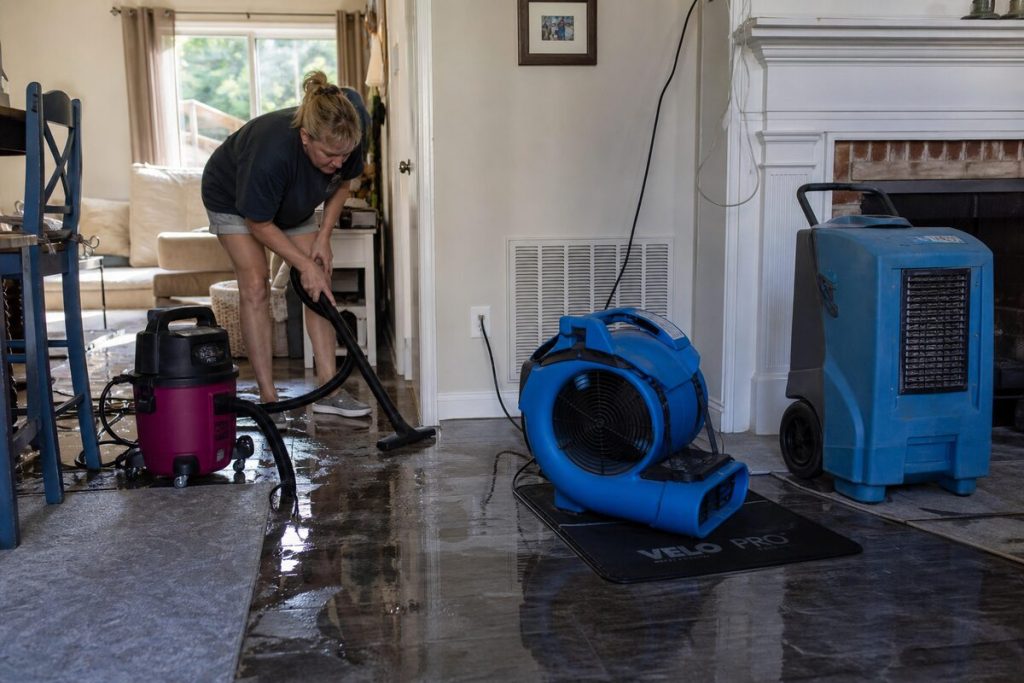
You can clean up water damage yourself when the water is clean, the area is small, it’s caught quickly, and you can confirm everything is dry with a moisture meter. Call a professional when the water came from outside or a sewer, when it soaked into walls, cabinets or carpet pad, when more than a room or two is affected, or when it sat for more than a day. The visible water is usually the easy part. What decides the outcome is the moisture you can’t see.
A quick way to decide
| Situation | DIY reasonable? | Why |
|---|---|---|
| Overflowed sink or tub caught right away, on tile | Yes | Clean water on a non-porous surface; mop, towel and fan it. |
| Supply line leak under one cabinet, found within hours | Usually | Pull everything out, dry the cabinet floor, check the wall behind with a meter. |
| Clean water that soaked a room of carpet | Maybe | Possible with extraction, removing the pad and dehumidification. See wet carpet after a flood. |
| Water heater or washing machine flood across several rooms | Usually not | Water wicks into drywall and under flooring and cabinets faster than household equipment can dry it. |
| Water came from outside (street, yard, bayou) | No | Contaminated floodwater; porous materials need removal and disinfection. |
| Sewage or toilet backup beyond the bowl | No | Biohazard. See sewage backup cleanup. |
| Ceiling leak with sagging drywall | No | Collapse risk; the ceiling cavity and insulation need opening and drying. |
| Leak you didn’t find for weeks | No | Likely rot or mold in the wall; may need a licensed mold assessment. |
The two things that decide it: water category and drying class
Restoration companies follow the IICRC S500 standard, which sorts water damage in two ways:
- Category (how dirty the water is): 1 is clean, 2 is gray, 3 is black or grossly contaminated. Category also gets worse with time; clean water left standing becomes gray. (Full breakdown: water damage categories explained.)
- Class (how much water there is to dry): from a small area of low-porosity materials (Class 1) up to deeply saturated materials like hardwood, plaster or concrete (Class 4). Higher classes need more equipment for longer.
DIY works for Category 1, Class 1 jobs. Once either number goes up, the equipment and know-how gap gets large quickly.
What DIY equipment can and can’t do
| Job | Household tool | Professional tool |
|---|---|---|
| Remove water | Mop, towels, shop vac | Truck-mounted or portable extractors, weighted carpet extractors |
| Move air | Box or pedestal fan | Air movers aimed along walls and floors; wall-cavity drying systems |
| Remove moisture from the air | Household dehumidifier | Commercial low-grain refrigerant (LGR) or desiccant dehumidifiers |
| Find hidden water | Touch and smell | Pin and pinless moisture meters, thermal cameras, hygrometers |
| Prove it’s dry | “It feels dry” | Daily logged readings against a dry reference area |
The last row matters most. Drywall can feel dry on the surface while the bottom plate and insulation behind it are still wet. In Houston’s humidity, that hidden moisture is what turns into swollen baseboards, cupped floors and mold a few weeks later. The EPA advises drying water-damaged materials within 24–48 hours to prevent mold.
If you do it yourself, do it properly
- Stop the source and make sure nothing electrical is in the wet area.
- Photograph everything before you clean, in case you file a claim.
- Extract as much water as possible. Every gallon you pull out is one you don’t have to evaporate.
- Remove what holds water: wet carpet pad, baseboards (so the wall can breathe), and soaked items in cabinets.
- Close the room and run a dehumidifier and the AC. Point fans along the wet surfaces.
- Buy or borrow a moisture meter. Take readings every day and stop only when wet areas match a dry area of the house.
- If readings aren’t dropping after two or three days, or you smell mustiness, call a professional.
The hidden cost of getting it wrong
A DIY job usually goes wrong in one of a few ways: mold behind the drywall, warped hardwood or laminate, delaminated cabinets, or an insurance claim that’s harder to support because there are no drying records. Homeowners policies generally expect you to take reasonable steps to prevent further damage after a covered loss. A documented drying job helps show you did. Mold changes the job too. In Texas, if you hire someone to remediate 25 contiguous square feet or more of mold, the work must be done by a TDLR-licensed mold remediation contractor, following a protocol from a separately licensed mold assessor.
Choosing a professional
Water damage restoration companies are independent businesses, and quality varies. Before work starts, ask:
- Do your technicians hold IICRC Water Damage Restoration certification? Can I see it?
- Can you show proof of liability insurance?
- Will I get daily moisture readings and photos?
- Is this a written estimate? What’s in it, and what’s extra?
- Are you asking me to sign an assignment of benefits? Read it before you sign.
Many companies will assess the damage at no charge, but ask about that up front. For typical price ranges, see our Houston water damage restoration cost guide.
Not sure which side of the line you’re on? Call (713) 422-2550 and we’ll connect you with an independent Houston restoration company. Ask them to take moisture readings and explain what they find.
Frequently asked questions
Can I clean up water damage myself?
Yes, for small clean-water spills caught quickly, especially on hard surfaces. Bring in a professional for contaminated water, water in walls or under flooring, multiple rooms, or water that sat more than a day.
Why can’t box fans dry water damage?
Fans speed up surface evaporation, but they don’t remove moisture from the air or get into wall cavities, under cabinets or into the slab. Without dehumidification and moisture readings, hidden water stays.
Do I need a moisture meter?
If you’re drying anything more than a surface spill, yes. It’s the only reliable way to know when drywall, framing and subfloor are actually dry.
Will insurance pay if I do the cleanup myself?
Policies vary. Most expect you to take reasonable steps to prevent further damage. Photograph everything, keep receipts for equipment, and talk to your insurer before you throw anything away.
What should I ask a water damage company?
Ask for IICRC certification, proof of insurance, a written estimate, daily moisture readings, and a clear explanation of any assignment of benefits before you sign.
Sources: EPA: Mold, Moisture and Your Home · TDLR: Mold Assessors and Remediators law · IICRC S500 standard
Water damage in your home right now?
Don't wait for it to spread. Call and we'll connect you with an available local company.
Call (713) 422-2550More Houston water damage guides
Water spreading right now? Don't wait.
Every hour costs you more in damage. Call now and we'll connect you with a local crew.