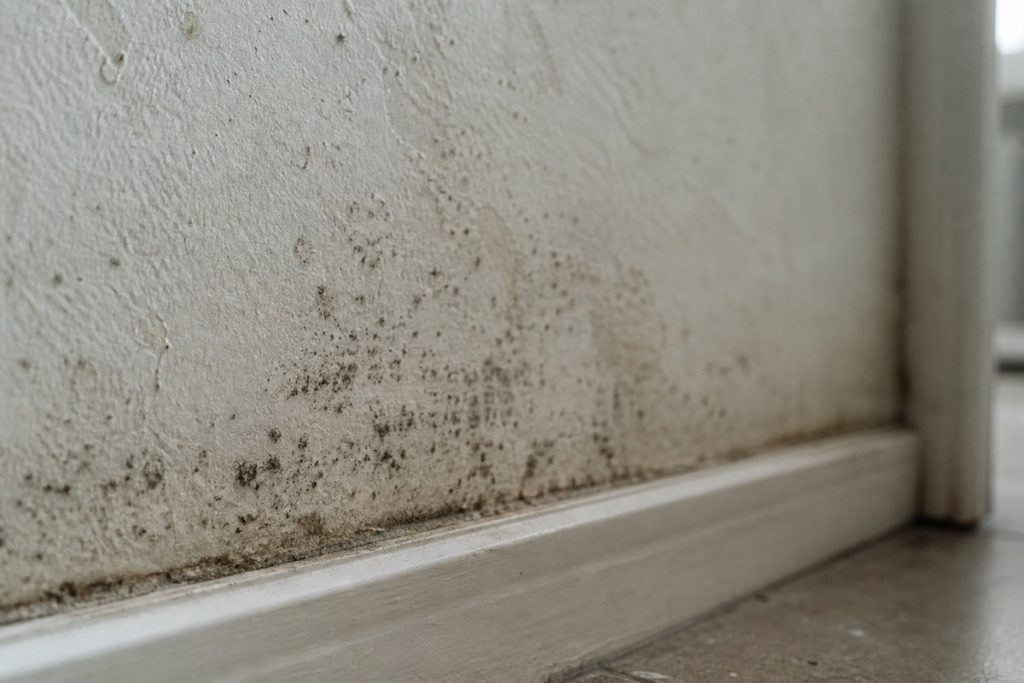
Mold removal usually costs about $1,200 to $3,800 nationally, and Angi’s 2026 cost guide puts the national average around $2,370. Angi’s Houston figures are a little lower: an average of about $2,025, with most homeowners paying roughly $900 to $3,300. Small, accessible jobs come in under that range. Mold inside walls, HVAC systems or across a whole house can reach five figures. These are typical market ranges, not quotes. Your price depends on the size, the location, and what has to be torn out and rebuilt.
Typical mold removal costs
| Item | Typical range (Angi) |
|---|---|
| Professional remediation, national | $1,223–$3,757 (avg. ~$2,368) |
| Professional remediation, Houston | ~$888–$3,298 (avg. ~$2,025) |
| Per square foot of affected area | $10–$25 |
| Bathroom | $500–$2,000 (Houston) |
| Walls or HVAC system | $1,000–$10,000 (Houston) |
| Attic | $1,000–$9,000 (Houston) |
| Whole house | $10,000–$30,000 |
| Mold inspection / assessment | ~$300–$1,075 (Houston) |
| Rebuild (drywall, flooring) | Extra, ~$5–$23 per sq ft depending on material |
Prices change and vary between companies. Use these to check whether a quote is in a normal range, then compare written scopes.
What drives the price
- Size. The affected square footage sets most of the labor. A 20 sq ft patch under a sink is a very different job from a whole wall line after a flood.
- Location and access. Mold on a surface you can reach is cheaper than mold in a wall cavity, the attic, a crawlspace or ductwork.
- Containment. Plastic barriers, negative air pressure and HEPA air scrubbers protect the rest of the house. Larger jobs need more of it.
- Materials removed. Moldy drywall, insulation, carpet and pad are usually cut out and bagged, not cleaned.
- The moisture source. The leak or humidity problem has to be fixed or the mold returns. Plumbing, roof or HVAC repairs are usually separate costs.
- Assessment and clearance. In Texas, larger jobs need a separate licensed assessor, which adds a fee (see below).
The Texas rule that affects your total: two separate companies
Texas regulates mold work through the Texas Department of Licensing and Regulation (TDLR). If you hire someone to deal with mold covering 25 contiguous square feet or more:
- A licensed mold assessment consultant inspects and writes a remediation protocol that defines what has to be removed and how.
- A licensed mold remediation contractor does the work according to that protocol.
- The same company can’t be both the assessor and the remediator on the same project. That avoids a company finding work for itself.
- After clearance, the remediator issues a Certificate of Mold Damage Remediation. Keep it. It’s your proof for a future buyer or insurer that the work was done properly.
So budget for both the assessment and clearance fee and the remediation itself. Ask each company for its TDLR license number and check it on TDLR’s site. Homeowners working on their own home are exempt from licensing, and jobs under 25 contiguous square feet aren’t covered by the rule.
Can you do it yourself to save money?
For small areas, yes. The EPA says homeowners can generally handle mold covering less than about 10 square feet. Wear gloves, goggles and an N95 respirator. Scrub hard surfaces with detergent and water, cut out and bag moldy drywall, and fix the moisture. Skip DIY for anything larger, for mold in the HVAC system, after a flood or sewage backup, or if anyone in the home has asthma or a weakened immune system. And don’t pay for testing you don’t need: the CDC and EPA say sampling is usually unnecessary when you can see the mold.
Does insurance pay for mold removal?
Sometimes. Many Texas homeowners policies exclude mold or limit it, but cover it when it results from a sudden, covered water loss that was reported promptly, like a burst pipe. Mold from long-term leaks or humidity is usually excluded. Check your policy’s mold limit, document the original water event, and see our Texas insurance guide. The cheapest mold job is the one that never happens: drying water damage within 24–48 hours (EPA) usually prevents it. Here’s how fast mold grows after water damage.
Red flags in a mold quote
- No mention of finding and fixing the moisture source.
- No containment for a job inside living space.
- “Fogging” or spraying only, with no removal of moldy materials.
- A company offering to both test and remediate the same 25+ sq ft job in Texas.
- No TDLR license number, or pressure to sign the same day.
Need a mold assessment or remediation? Call (713) 422-2550 and we’ll connect you with an independent local company. Ask for its TDLR license and a written scope.
Frequently asked questions
How much does mold removal cost?
Angi’s 2026 data puts professional mold remediation at about $1,200–$3,800 nationally, averaging around $2,370, and about $900–$3,300 in Houston. Hidden or whole-house mold can cost $10,000 or more.
How much does mold removal cost per square foot?
Typically about $10–$25 per square foot of affected area, before rebuilding drywall or flooring.
Do I need a mold inspection before removal in Texas?
If you’re hiring someone for 25 contiguous square feet or more, yes. A licensed assessor writes the protocol, and a different licensed remediation company does the work.
Is mold removal covered by homeowners insurance?
Sometimes, when the mold came from a sudden covered water loss. Mold from long-term leaks or humidity is usually excluded, and many policies cap mold coverage.
Can I remove mold myself?
For areas under about 10 square feet, the EPA says homeowners can usually handle it with gloves, goggles and an N95. Larger, hidden or HVAC mold needs professionals.
Sources: Angi: Mold remediation cost (national) · Angi: Mold remediation cost in Houston · TDLR: Mold program · EPA: Mold, Moisture and Your Home
Water damage in your home right now?
Don't wait for it to spread. Call and we'll connect you with an available local company.
Call (713) 422-2550More Houston water damage guides
Water spreading right now? Don't wait.
Every hour costs you more in damage. Call now and we'll connect you with a local crew.