Fast — and faster here than in most of the country. The number you’ll see everywhere is “24 to 48 hours,” and it’s roughly right, but in Houston’s heat and humidity that’s often the low end of how quickly things go wrong. If you had water damage in the last day or two, you’re reading this at the right time, because the window to prevent mold is still open — but it’s closing.
The mold timeline, hour by hour
Mold spores are already in the air of every home, everywhere, all the time. They don’t need to arrive — they just need water and a surface. Here’s what happens after that:
- Hours 0–24: Water spreads into porous materials — drywall, carpet, pad, insulation, subfloor. You won’t see mold yet, but the conditions are being set. Everything that’s about to happen is decided by how fast this water gets removed.
- Hours 24–48: Spores settle onto damp surfaces and begin to grow. This is the window everyone talks about. Dry the structure properly in here and you usually prevent mold entirely. Miss it, and you’re moving from a cleanup job to a remediation job.
- Days 3–12: Visible mold appears, and the musty smell shows up. Colonies establish and start to spread. Now it’s not a question of preventing mold — it’s removing it.
- Beyond 12 days: Mold moves into wall cavities, HVAC systems, and structural materials. This is the expensive, disruptive stage — the one that means containment, demolition, and rebuilding.
The takeaway isn’t the exact hour — it’s the shape of the curve. The cost and difficulty of the problem climb steeply with every day the structure stays wet.
Why Houston is worse than the textbook
Mold has two requirements: moisture and warmth. Houston hands it both for most of the year. High outdoor humidity means indoor humidity stays elevated too, so even areas that look dry can hold enough moisture for growth. A wet wall in a dry, air-conditioned climate has a fighting chance to dry on its own. A wet wall in Houston in August does not — it stays damp long enough to grow.
That’s why “just point some fans at it” fails here more than elsewhere, and why proper drying — the kind measured with a moisture meter, not judged by touch — isn’t optional in this climate.
The warning signs mold has already started
If you’re past the 48-hour window, watch for these:
- A musty, earthy smell that doesn’t go away — often the first sign, before anything is visible.
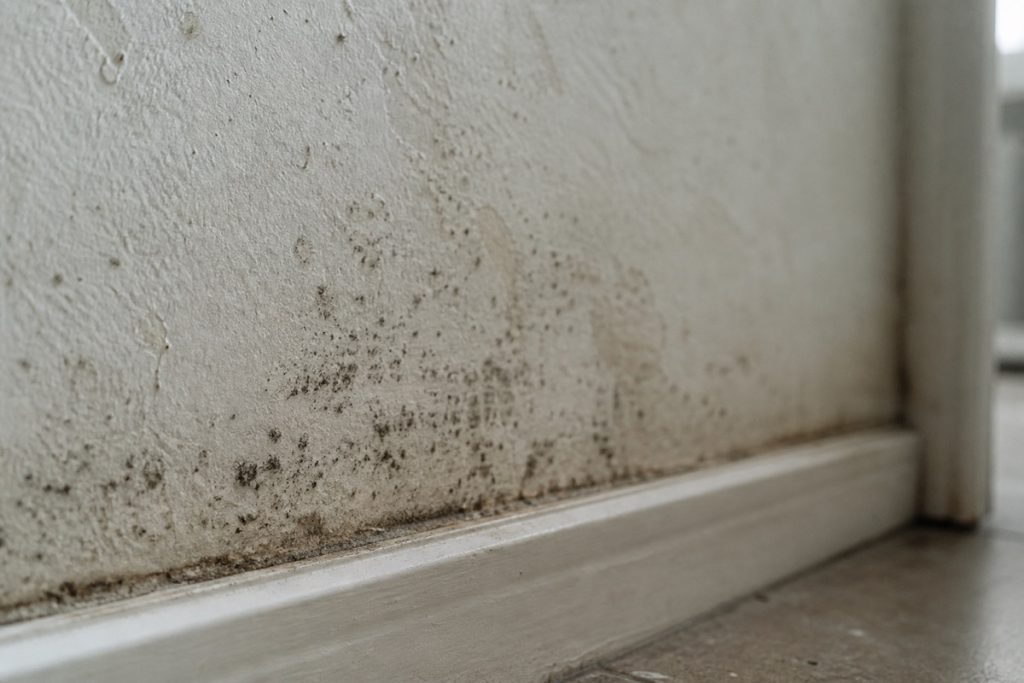
- Discoloration on walls, ceilings, or baseboards — black, green, gray, or brown spots or streaks.
- Peeling, bubbling, or warping of paint, wallpaper, or drywall.
- Allergy-like symptoms — coughing, congestion, itchy eyes, headaches — that ease when you leave the house and come back when you return.
If you’re seeing or smelling these, the timeline has moved from prevention to removal. (That’s the job our mold remediation crews handle — properly, with containment, not by painting over it.)
How to beat the clock
Prevention inside the 24–48 hour window is almost always cheaper and less disruptive than remediation after. To stay ahead of it:
- Get the water extracted fast — the same day, if possible.
- Dry the structure properly, which means commercial air movers and dehumidifiers reaching inside walls and under floors, not just surface fans.
- Confirm it’s actually dry with moisture readings back to normal — “feels dry” is not the same as “is dry.” Trapped moisture behind a dry-feeling wall is exactly how mold gets started. (This is why our water damage cleanup always ends with monitoring, not a guess.)
If mold has already started
Don’t reach for bleach. Wiping surface mold with bleach doesn’t fix mold that’s growing in porous materials or inside a wall — it lightens what you can see and leaves the colony feeding on the moisture underneath. Real remediation finds the moisture source, contains the area so spores don’t spread through the house, removes affected materials, and dries the space so it can’t come back. Surface cleaning a mold problem is how it returns in a month.
The bottom line
Mold is fast, and Houston makes it faster. If your water damage is recent — within the last day or two — you very likely still have time to prevent it entirely by getting the structure properly dried now. If it’s been longer, or you’re already smelling that musty smell, the move is to have it looked at before it spreads into places that are expensive to reach.
Water damage in the last day or two? You may still be inside the window — beat the mold clock. Call (713) 422-2550 for a free inspection.
Frequently asked questions
How quickly does mold grow after water damage?
Typically within 24–48 hours, and often faster in Houston’s humidity. Visible mold and odor usually appear within 3–12 days.
Can I stop mold if I act fast?
Yes — if the structure is properly dried within the first 24–48 hours, you can usually prevent mold from developing at all.
Does bleach kill mold?
It lightens surface mold but doesn’t fix mold growing in porous materials or inside walls. Real remediation removes the source and the affected material.
Why does mold grow faster in Houston?
High heat and humidity keep indoor surfaces damp longer, so mold has the moisture and warmth it needs for more of the year.
Water damage in your home right now?
Don't wait for it to spread. Talk to a Houston crew, 24/7.
Call (713) 422-2550More Houston water damage guides
Water spreading right now? Don't wait.
Every hour costs you more in damage. Call now and get a Houston crew moving.