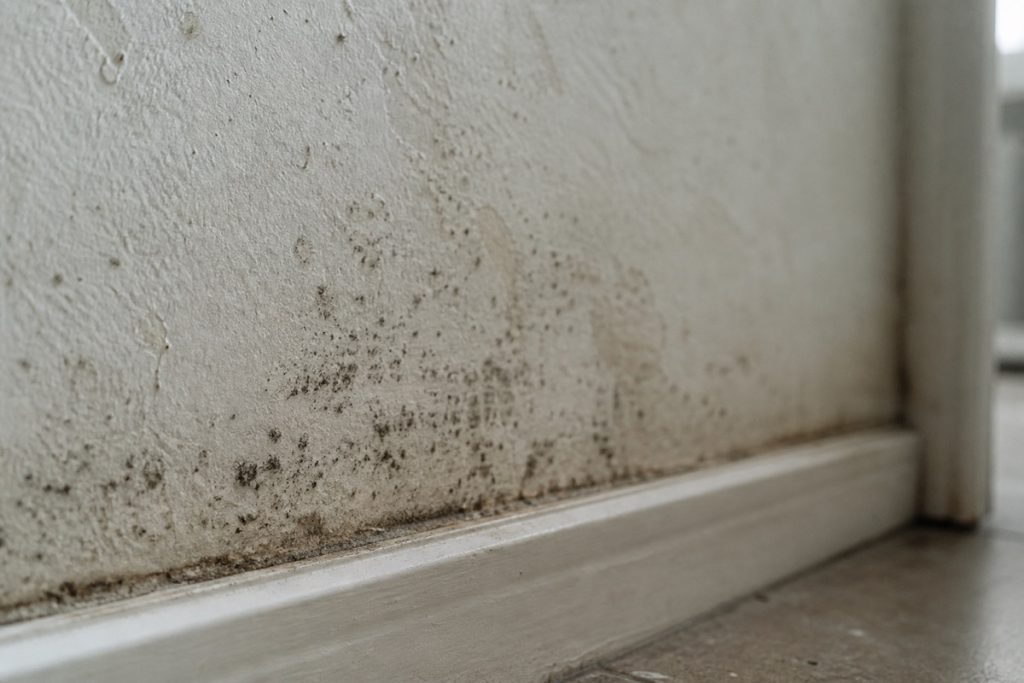
“Black mold” usually refers to Stachybotrys chartarum, a dark greenish-black mold that grows on wet drywall, wood, and paper. “Regular mold” is everything else — the far more common greens, whites, and grays you see in bathrooms and around leaks. The honest truth: you can’t reliably tell them apart by color, and the response to any indoor mold with a moisture source is basically the same.
What is black mold?
Stachybotrys is a specific mold that needs constant moisture and cellulose (drywall paper, wood) to grow. It tends to be slimy and dark. It gets the scary headlines, but plenty of harmless-looking molds are dark too, and plenty of Stachybotrys colonies don’t look like the pictures. Color alone isn’t a diagnosis.
Is black mold more dangerous?
For most healthy people, the practical answer is that any significant indoor mold growth should be removed — the exact species matters less than the fact that it’s growing and you’re breathing it. People with asthma, allergies, or weakened immune systems are more sensitive to all molds. Rather than fixating on whether it’s “black mold,” treat visible growth plus a moisture problem as something to fix.
How can you tell the difference?
You can’t, by eye. The only way to identify the species is lab testing of a sample — which is what a mold inspection and test provides. For most homeowners, testing is only worth it when there’s a health concern, a real-estate deal, or hidden mold; if you can see it and see the leak, the fix is the same either way.
What to do if you find it
Don’t disturb it (that releases spores), stop the moisture source, and get it assessed. Small areas can sometimes be cleaned; larger growth needs professional remediation with containment so spores don’t spread through the house. (And in Houston’s humidity, it can come back fast if the moisture isn’t fixed.)
Found a dark patch you’re worried about? Get it looked at properly. Call (713) 422-2550 — Houston, 24/7.
Frequently asked questions
Can you tell black mold by its color?
No. Many molds are dark, and true black mold (Stachybotrys) doesn’t always look like the photos. Only a lab test can identify the species.
Is all black mold toxic?
The bigger point is that any significant indoor mold growth should be removed. People with asthma, allergies, or weak immune systems are more sensitive to all molds, not just “black” ones.
Should I test mold before removing it?
Usually only if there’s a health concern, a home sale, or hidden mold. If you can see the mold and the moisture source, the fix is the same regardless of species.
Water damage in your home right now?
Don't wait for it to spread. Talk to a Houston crew, 24/7.
Call (713) 422-2550More Houston water damage guides
Water spreading right now? Don't wait.
Every hour costs you more in damage. Call now and get a Houston crew moving.