Structural Drying & Dehumidification in Houston, TX
Pumping out the water is only half the job. We dry what's left inside your walls, subfloor, and framing — and prove it's dry with moisture readings, not a guess.
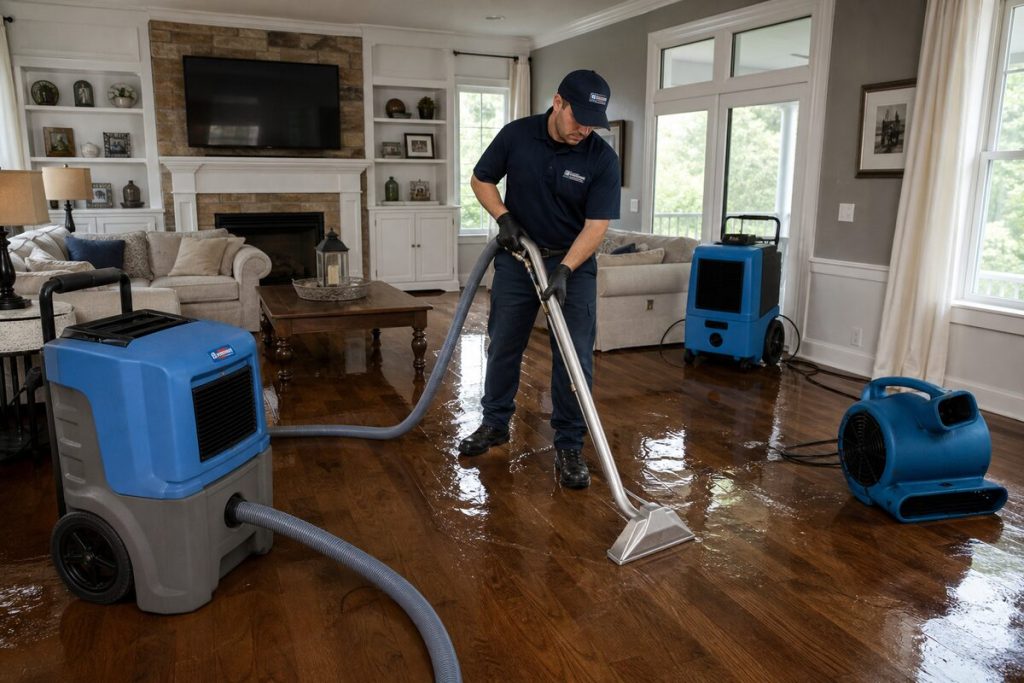
Structural drying is the process of removing moisture from the building materials themselves — the framing, subfloor, drywall, and insulation — after the standing water is gone. It's done with commercial air movers and dehumidifiers arranged to a plan, and confirmed with moisture meters. In Houston's humidity, it's the step that decides whether you get mold and warped floors weeks later.
Why isn't extraction enough?
Because water hides. After the visible water is pumped out, moisture is still soaked into the structure — behind baseboards, under the flooring, inside wall cavities. Home fans dry the surface and stop; they can't pull that moisture out. Left alone it feeds mold and rots wood.
How does structural drying work?
- Moisture mapping — meters and thermal imaging find every damp area.
- Air movers — high-velocity fans placed to lift moisture off surfaces into the air.
- Dehumidifiers — commercial units pull that moisture out of the air so it can't re-settle.
- Daily monitoring — readings tracked until materials hit a dry standard.
How long does structural drying take?
Usually about 3 to 5 days, depending on how much water soaked in, the materials involved, and the humidity. Hardwood and plaster take longer than drywall. The crew keeps drying until the meters say it's done — not until it feels dry.
How do you know when it's actually dry?
Moisture readings, compared against a dry baseline elsewhere in the home. This is the difference between real drying and a job that looks finished but leaves damp material behind a fresh wall. Proper drying is what prevents mold after water damage.
Frequently asked questions
Can't I just use my own fans to dry it out?
Home fans dry surfaces, not the moisture inside walls and subfloor. That trapped water is what grows mold, so it needs commercial air movers and dehumidifiers to reach.
How long do the dryers need to run?
Typically 3–5 days, running continuously. Turning them off early is a common way that mold gets a foothold.
Why does drying matter so much in Houston?
Our humidity means moisture lingers and mold starts fast — often within 24–48 hours — so thorough, verified drying matters more here than in drier climates.
Related services
Vetted crews. Honest pricing.
Certified & insured crews
We connect you with licensed, insured, IICRC-certified professionals — S500 (water), S520 (mold), S710 (fire) — trained in Applied Structural Drying for Houston's humidity.
Honest pricing, in writing
A written scope before work starts, an itemized estimate, drying verified with moisture meters instead of a guess — and no surprise invoices at the end.
Insurance documented
Moisture readings, photos, a written scope, and a line-item estimate prepared the way adjusters expect — so your claim moves and pays.
Fast, local response
Local Houston-area crews answer 24/7 and move fast, because water damage compounds by the hour and the mold clock starts in 24–48 hours.
Water damage that needs drying out?
Get commercial drying started before mold does. Call a Houston crew, 24/7.