Mold Remediation in Houston
Mold that keeps coming back means moisture is still getting in. Call and we'll connect you with an independent mold remediation company, and explain how Texas licensing protects you along the way.
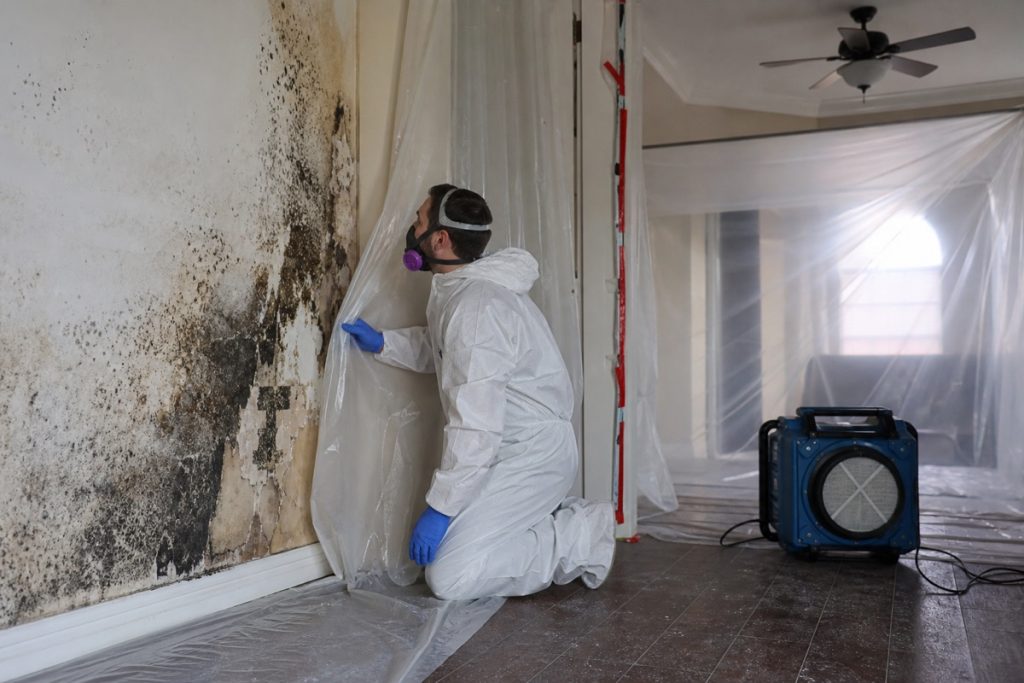
Houston's mold problem is mostly a moisture problem. Long humid summers, air conditioners that run most of the year, attic ductwork that sweats, and a steady supply of roof, plumbing and flood leaks give mold everything it needs. Remediation means removing the growth and the material it's rooted in and fixing the water that fed it. Spraying, painting or "fogging" without fixing the source just buys time.
Texas has specific rules for mold work
Texas is one of a handful of states that licenses mold work. The program is run by the Texas Department of Licensing and Regulation (TDLR), and the key points for a homeowner are:
- Assessment and remediation are separate licenses. A mold assessment consultant evaluates the problem and writes the remediation protocol; a mold remediation contractor does the removal.
- They can't be the same company on the same job. Texas rules prohibit a license holder from performing both the assessment and the remediation on the same project, and bar owning an interest in both companies on that project. That separation exists to stop anyone from inspecting a house and then selling themselves the cleanup.
- The 25-square-foot line. In most cases, visible mold covering less than 25 contiguous square feet can be cleaned up by someone who isn't licensed. Larger jobs done by a hired company fall under the licensing rules.
- Homeowners can do their own work. An owner remediating a residential property they own with fewer than 10 units isn't required to hold a license. That exemption doesn't extend to an unlicensed contractor you hire.
- You get paperwork at the end. After a licensed project, the assessor performs a post-remediation assessment, and within 10 days of the project ending the remediator and assessor sign a Certificate of Mold Damage Remediation. Keep it: Texas law limits an insurer's ability to make underwriting decisions based on prior mold damage that was properly remediated and certified.
Rapid Dry Houston is a referral service and holds no mold license. Any company you're connected with should give you its own TDLR license number, and you can verify it on TDLR's license search before work starts.
How a licensed remediation project usually runs
- Assessment. A licensed assessment consultant inspects, measures moisture, may take samples, and writes a protocol that spells out the areas to be remediated, containment, and the clearance criteria. See mold inspection & testing for what that visit involves.
- Work plan. The remediation contractor prepares a plan to carry out the protocol, and for larger projects files a notification with TDLR before starting.
- Containment. Plastic barriers and negative air pressure (an air scrubber exhausting outside the work area) keep spores from spreading into clean rooms.
- Removal. Moldy drywall, insulation, carpet and other porous materials are cut out and bagged. Wood framing and other hard surfaces are cleaned, often by sanding or wire-brushing, and HEPA-vacuumed.
- Moisture correction. The leak, condensation or drainage problem gets fixed, and the area is dried.
- Clearance. The assessor returns for the post-remediation assessment. If the area passes, the certificate is issued and rebuild can begin.
Where mold shows up in Houston homes
- Around attic AC equipment and ducts: overflowing condensate pans and sweating ductwork stain ceilings below.
- Behind and under sinks, dishwashers and refrigerators after slow leaks.
- Bottom of exterior walls after flooding, or where sprinklers and poor grading keep the slab edge wet.
- Bathrooms without working exhaust fans.
- Closets on exterior walls, where air doesn't circulate and humidity stays high.
Mold that follows a leak is usually a timing problem. The CDC advises drying water-damaged areas within 24 to 48 hours; if that didn't happen, assume growth. More on that in how fast mold grows after water damage.
What to look for in a mold remediation company
- A TDLR remediation license, and a separate, independent assessor for the protocol and clearance. Be wary if a company offers to "do both."
- Proof of insurance. TDLR requires licensed mold companies to carry commercial general liability coverage; ask for the certificate.
- Training you can check, such as IICRC Applied Microbial Remediation Technician (AMRT) certification for the people doing the work.
- A written scope tied to the protocol, not a lump sum for "mold treatment."
- A plan for the moisture source. If nobody is addressing the leak, the mold comes back.
- Skepticism toward miracle sprays. Fogging or coating over growth isn't a substitute for removing contaminated material.
Cost depends heavily on how much material has to come out and how hard it is to reach. See our Houston mold removal cost guide for typical ranges.
Insurance and mold
The Texas Department of Insurance explains that most homeowners policies don't cover mold from gradual leaks or long-term humidity, but if mold grows as a result of sudden and accidental water damage that is covered, like a burst pipe, the mold damage may be covered too. Mold that follows a flood isn't covered by a homeowners policy, because flooding itself isn't. Some policies cap mold coverage or exclude it, so check your declarations page.
Mold help in nearby cities
Area pages with local housing and moisture issues: Cypress · Spring · Tomball · Kingwood · Humble · The Woodlands · Conroe
Sources: TDLR: Mold Assessors and Remediators FAQs · Texas Mold Assessors and Remediators Law · Texas Department of Insurance · CDC mold cleanup guide
Frequently asked questions
Can I clean up mold myself in Texas?
Often, yes. Small areas under 25 contiguous square feet generally don't require a license, and owners of residential property with fewer than 10 units can do their own remediation. Wear an N95 respirator, gloves and eye protection, and fix the moisture source first.
Why can't the mold inspector also do the removal?
Texas rules prohibit the same license holder from performing both assessment and remediation on one project. It keeps the person deciding what needs removing from profiting off the removal.
Does bleach kill mold on drywall?
It may lighten the stain, but drywall is porous and the growth extends into the paper and gypsum. Moldy drywall is generally cut out and replaced, not bleached.
What is a Certificate of Mold Damage Remediation?
A signed document issued after a licensed remediation passes its post-remediation assessment. It records that the mold identified in the protocol was remediated, and it's worth keeping for insurance and for when you sell.
Will mold come back after remediation?
Not if the moisture problem was fixed and the area was dried. Regrowth almost always traces back to a leak, condensation or humidity issue that wasn't resolved.
Related services
Independent local crews. Ask the right questions.
Independent local companies
Rapid Dry Houston is a referral service. We connect you with independent restoration companies that serve your area; they inspect, quote and do the work.
Check licenses & insurance
Before work starts, ask any crew for proof of insurance and its IICRC certifications (S500 water, S520 mold, S700 fire & smoke). Reputable companies share them gladly.
Get the scope in writing
Ask for a written scope and an itemized estimate before work begins, plus moisture readings that show the structure is actually dry before the job is called done.
Document for insurance
Photos, moisture logs and a line-item estimate in the format adjusters expect keep a claim moving. Ask the crew to provide them, and keep your own photos too.
A Texas note: state law (TDLR) requires mold assessment and mold remediation to be performed by separately licensed companies. An independent assessment protects you from being sold remediation you don't actually need — which is why an honest inspection always comes first.
Found mold that keeps coming back?
Call and we'll connect you with an independent mold company. Ask for its TDLR license number.