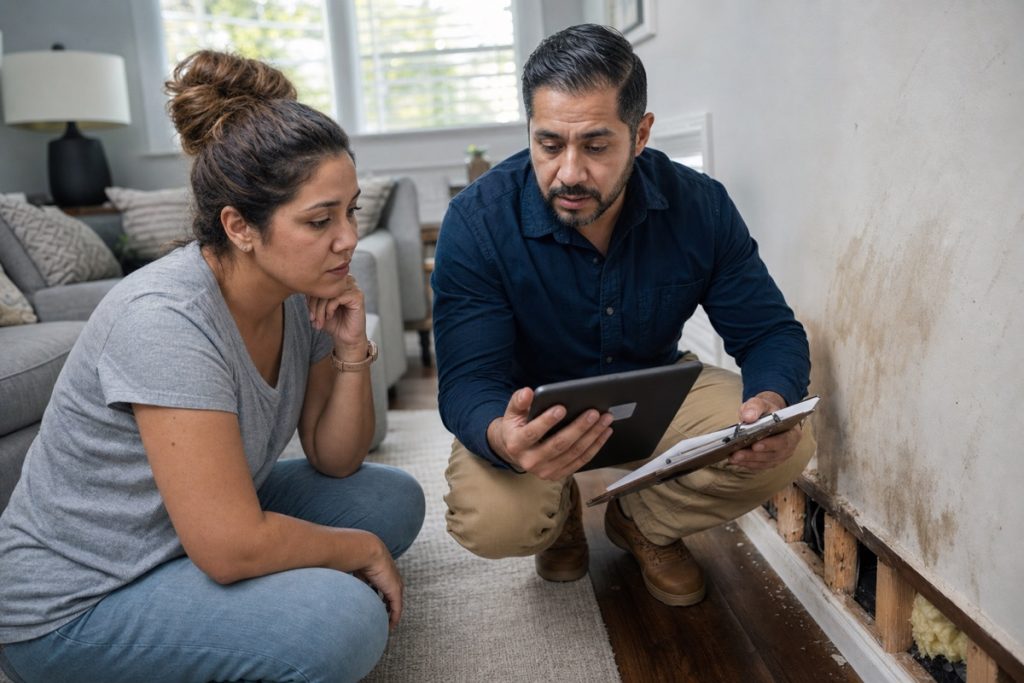
Most of the time, yes — but which kind of water damage decides everything. A burst pipe and a flooded street can leave the exact same puddle in your living room and be treated completely differently by your insurance company. Here’s the plain version, written for Texas homeowners, so you know where you stand before you file.
(This is general information, not a coverage promise — every policy is different, so read yours or ask your agent. But the patterns below hold for most standard Texas homeowners policies.)
Usually covered: “sudden and accidental”
The magic words in almost every policy are sudden and accidental. If the damage happened suddenly and by accident, a standard Texas homeowners policy usually covers it:
- A burst or frozen pipe that lets go and floods a room.
- A water heater that fails and dumps its tank.
- A washing machine or dishwasher supply line that breaks.
- A roof leak from storm damage — wind lifts shingles, rain gets in.
- An overflow from a plumbing fixture that wasn’t your fault.
In these cases the water itself is covered, and usually so is the resulting damage — the soaked drywall, flooring, and the drying and repair work to fix it. This is the most common water-damage scenario we see, and it’s the one insurance is designed for. (If this is you, our page on burst pipe water damage walks through the response.)
Usually NOT covered
Three big categories tend to fall outside a standard policy:
1. Flooding from outside. Rising water — storm surge, an overflowing bayou or creek, water that comes in across the ground — is not covered by standard homeowners insurance. It needs a separate flood insurance policy (often through the NFIP or a private flood insurer). This is the single most important gap in Houston, where a huge share of water damage is flood, not plumbing. If you’re in or near a flood-prone area and you only have standard homeowners, you are not covered for the thing most likely to happen to you. (Our flood cleanup page explains why flood water is also handled differently once it’s inside.)
2. Gradual leaks. A slow drip under a sink that rotted the cabinet over months, or a shower that’s been leaking behind the tile — these are usually denied as maintenance issues you “should have caught.” Insurance covers accidents, not wear and neglect.
3. Neglect and deferred repairs. If the damage traces back to something you knew about and didn’t fix, expect a denial.
The gray areas (where claims get complicated)
Sewer and drain backups. A sewage backup coming up through a drain is often only covered if you added a specific backup endorsement to your policy. Many homeowners don’t have it and find out at the worst possible time. If you’re on an older line or in a low spot, it’s worth asking your agent about. (See sewage backup cleanup for why this one is a health issue, not just a coverage one.)
Mold. Mold is the classic gray area. It’s often covered when it results from a covered water event that was handled promptly — and denied when it grew from a leak that sat. This is exactly why fast response and documentation matter so much: the difference between “covered mold from a burst pipe” and “excluded mold from neglect” can come down to how quickly you acted and whether you can prove it.
Covered vs. not — quick reference
| Situation | Typically covered? |
|---|---|
| Burst / frozen pipe | ✅ Yes (sudden & accidental) |
| Water heater failure | ✅ Yes |
| Appliance supply line break | ✅ Yes |
| Storm roof leak | ✅ Usually |
| Outside flooding / rising water | ❌ No — needs flood insurance |
| Slow / gradual leak | ❌ Usually denied (maintenance) |
| Sewer / drain backup | ⚠️ Only with a backup endorsement |
| Mold | ⚠️ Depends — covered if from a prompt-handled covered event |
How to protect your claim
Whether a covered loss actually gets paid often comes down to what you do in the first hours:
- Mitigate. Your policy expects you to stop further damage — shut off the water, prevent more from spreading. Failing to mitigate can reduce a payout.
- Photograph everything before cleanup. Every affected room, every damaged item, before you move or throw anything away.
- Keep the documentation. The restoration crew’s moisture readings, written scope, and itemized estimate are the backbone of a claim. Adjusters trust measured evidence over descriptions.
- Report promptly. Late reporting gives insurers a reason to question the claim.
- Don’t throw out big items until they’ve been documented — an adjuster may want to see them.
The pattern across all of this: act fast, and write it all down. The homeowners whose claims go smoothly aren’t the ones who argued hardest — they’re the ones who documented the loss properly from hour one.
Filing a claim after water damage? Get the documentation done right from the start — it’s what gets claims paid. Call (713) 422-2550 for a free, documented inspection.
Frequently asked questions
Does homeowners insurance cover a burst pipe in Texas?
Yes, in almost all cases — a burst pipe is the textbook “sudden and accidental” event standard policies cover.
Is flood damage covered by homeowners insurance?
No. Rising water from outside needs a separate flood insurance policy. This is the key gap for Houston homeowners.
Does insurance cover water damage that caused mold?
Often yes, if the mold came from a covered event that was handled promptly. Mold from a long-ignored leak is usually excluded.
Do I need a special rider for sewage backup?
Usually yes — sewer/drain backup is commonly excluded unless you’ve added a backup endorsement. Check your policy.
Water damage in your home right now?
Don't wait for it to spread. Talk to a Houston crew, 24/7.
Call (713) 422-2550More Houston water damage guides
Water spreading right now? Don't wait.
Every hour costs you more in damage. Call now and get a Houston crew moving.