Fire & Smoke Damage Restoration in Houston
A house fire leaves three problems behind: burned materials, soot and smoke odor, and the water used to put it out. Call and we'll connect you with an independent Houston restoration company that handles fire and smoke cleanup.
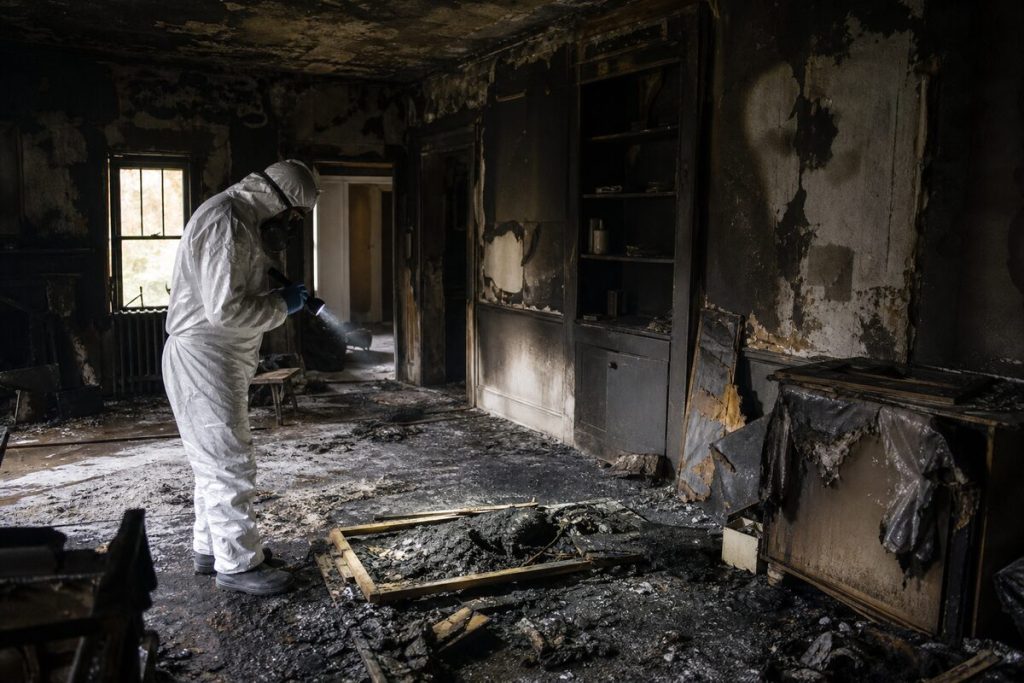
Even a small kitchen fire that the fire department puts out in minutes can leave a whole house smelling of smoke, with a gray film on every wall and wet drywall in the rooms near the fire. Fire damage restoration covers all of it: securing the building, cleaning soot and residue off the structure and your belongings, getting rid of the odor, drying out the firefighting water, and then rebuilding what can't be saved. This page explains each part so you know what a good company should be doing, and what you should be doing in the meantime.
How fire damage restoration works, step by step
Every fire is different, but a well-run fire restoration job in Houston usually follows the same sequence. Knowing it helps you judge whether the company you're connected with is on track:
- Assessment. A walk-through to check structural safety, map how far smoke and soot travelled, test which type of residue is present, and find wet areas left by the fire hoses.
- Emergency protection. Board-up of broken windows and doors, and tarping of any roof openings.
- Water removal and drying. Extracting firefighting water and drying the structure before mold can start.
- Soot cleanup and smoke damage restoration. Cleaning residue from walls, ceilings, cabinets, floors and the HVAC system, or removing materials that can't be cleaned.
- Contents cleaning. Belongings are cleaned on site or packed out, with an inventory of what is saved and what is lost.
- Deodorization. Treating the remaining odor at its source and in the air.
- Reconstruction. Replacing burned framing, drywall, insulation, flooring, cabinets and paint, with permits where required.
Small fires may skip some steps; large ones can run all seven over several months. The sections below explain the parts homeowners most often ask about.
The first 48 hours after a house fire
Most of the decisions that affect how much you recover get made in the first two days. In rough order:
- Stay out until the fire department says the house is safe. Floors and ceilings weakened by fire can fail, and smoldering material can flare up again.
- Call your insurance company and get a claim number. Ask right away whether your policy includes additional living expenses (more on that below) and what they will pay for a hotel or rental while the house is unlivable.
- Get the building secured. Windows broken by heat or by firefighters and holes cut in the roof for ventilation need to be boarded and tarped. In Houston, an afternoon thunderstorm can pour rain into an open roof within hours.
- Photograph everything before anything is moved or cleaned: each room, the ceilings, closets, and the outside of the house.
- Don't try to wipe soot off walls. Dry soot smears into paint and plaster when you rub it with a damp cloth. Restoration technicians use dry chemical sponges first for this reason.
- Don't run the air conditioning or furnace until the system has been checked. A running HVAC system pulls soot through the ducts and spreads it into rooms the fire never reached.
- Throw out food, medicine and cosmetics that were exposed to heat, smoke or firefighting water, including food in the refrigerator if the power was off.
- Take important documents, medication, valuables and pets if the fire department allows a quick, escorted entry.
Safety before anyone goes back inside
Fire damage is not only cosmetic. Electrical wiring near the fire can be damaged inside the walls, so power is often disconnected, and it should stay off until a licensed electrician has looked at the system. Soot is made of very fine particles that you shouldn't breathe; anyone handling it should wear at least an N95 respirator and gloves. Wet ceilings can hold surprising amounts of water and come down without much warning. A professional crew will usually assess the structure, set up air scrubbers with HEPA filters, and decide which areas are safe to work in before cleaning starts.
Fire damage cleanup: what you can do and what to leave to a pro
After a fire, many homeowners want to start cleaning right away. Some fire damage cleanup is safe and helpful to do yourself once the house is cleared for entry. Much of it is better left to a crew with the right equipment, because the wrong cleaning method can set stains permanently or spread soot further.
Reasonable to do yourself (after photographing everything):
- Remove undamaged valuables, documents and medication to a clean place.
- Empty the refrigerator and freezer if the power was off, and throw out exposed food.
- Open windows for fresh air on dry days if the fire department says it's safe; outdoor air won't hurt a smoky house the way it can hurt a wet one.
- Cover undamaged furniture with clean sheets or plastic, and put clean towels or runners on heavily used paths so soot isn't tracked onto clean carpet.
- Keep a list of everything you throw away, with photos.
Better left to professionals:
- Soot on walls, ceilings and cabinets, where water and household cleaners can smear residue into the surface.
- Anything charred, wet or structurally damaged.
- The HVAC system and ductwork.
- Electronics, artwork, rugs and upholstered furniture.
- Anything involving ash or debris from burned plastics, insulation or building materials, which can contain hazardous residues.
Soot cleanup: not all soot is the same
What burned, and how hot the fire was, determines the type of residue left behind. That decides which cleaning methods work and how much can be saved. A company that knows the difference will test surfaces before choosing a method.
| Residue type | Typical source | What it means for cleaning |
|---|---|---|
| Dry smoke | Fast, hot fires burning paper and wood | Powdery, sits on the surface; usually the easiest to remove with dry sponging and vacuuming. |
| Wet smoke | Low, smoldering fires burning plastics, foam and rubber | Sticky and smeary with a strong odor; needs wet cleaning agents and often sealing. |
| Protein residue | Kitchen fires where food burned | Almost invisible but with a strong, stubborn smell; it can yellow paint and cabinets. |
| Furnace puffback | A malfunctioning oil-fired burner | An oily black film spread through the ductwork; often affects the whole house. |
Soot is also acidic. Left on surfaces it can etch glass, pit chrome and discolor grout and stone, so cleaning the most vulnerable items early saves money later.
Smoke damage restoration and smoke odor removal
Smoke odor lingers because the particles work into porous materials: drywall, insulation, carpet pad, upholstery, wood framing and the inside of air ducts. Air fresheners and fragrance sprays only cover it, and the smell returns on the first hot, humid day. Real odor removal works in layers. First the residue is physically cleaned off or removed. Charred framing may be cleaned or sealed with a shellac-based or odor-blocking primer before new drywall goes on. Ductwork is cleaned. Then the air is treated, using methods such as thermal fogging, hydroxyl generators, or ozone. Ozone is only used in an empty building, because the EPA warns that ozone is harmful to breathe. Ask the company which method they plan to use and why.
Common smoke odor removal methods, and when they're used:
| Method | What it does | Notes |
|---|---|---|
| Cleaning and removal | Takes the residue that causes the smell out of the house. | Always the first step; nothing else works without it. |
| Sealing | Locks remaining odor into cleaned framing or subfloor with an odor-blocking primer. | Used before new drywall or flooring goes on. |
| Thermal fogging | A heated deodorizer fog that reaches the same places smoke did. | Occupants and pets leave during treatment. |
| Hydroxyl generators | Break down odor molecules in the air over several days. | Slower, but often usable in occupied spaces; ask the company. |
| Ozone | A strong oxidizer that neutralizes odors. | Only in an empty building, then aired out; harmful to breathe. |
Contents cleaning and pack-out
When a lot of belongings are smoke-damaged, many companies do a pack-out: they inventory, photograph, box and move your contents to their facility for cleaning while the structure is worked on. Clothing and fabrics can often be laundered or dry-cleaned with specialist products; hard items may go through ultrasonic cleaning; electronics need careful handling because soot can be conductive and corrosive. Items that can't be saved are listed instead of quietly thrown away. That room-by-room inventory is valuable: it becomes the backbone of the personal-property (contents) part of your insurance claim, so ask for a copy.
Board-up, tarping and the firefighting water
Firefighters often break windows and cut openings in the roof to release heat and smoke. Once they leave, those openings let rain and intruders in. Most homeowners policies expect you to take reasonable steps to protect the property from further damage, so emergency board-up and tarping are usually among the first things done and should be documented with photos and a receipt.
Then there is the water. Fire hoses put a large volume of water into a house in a short time, and it soaks into subfloors, wall cavities and insulation. In Houston's humidity, wet building materials left alone can start to grow mold within a couple of days, adding a second problem to the fire. That's why most fire jobs include emergency water extraction and structural drying with dehumidifiers and moisture readings, before any rebuilding begins. Once the house is dry and clean, reconstruction follows the same path as other water damage repairs: drywall, insulation, flooring, cabinets and paint.
Insurance: fire coverage and additional living expenses in Texas
Fire and smoke are covered causes of loss in standard Texas homeowners policies, but the claim usually has three separate parts, each with its own limit:
- Dwelling: the structure itself, including cleaning, drying and rebuilding.
- Personal property (contents): furniture, clothing, electronics and everything else, supported by your inventory.
- Additional living expenses (ALE), sometimes called loss of use: the extra cost of living somewhere else while the house is being repaired, such as hotel or rental costs and meals above what you'd normally spend.
ALE is often limited to a percentage of your dwelling coverage or a set period of time, so read your declarations page or ask your adjuster for the exact limit. Keep every receipt and compare against your normal monthly costs, because ALE pays the additional amount, not your whole budget. If a restoration company asks you to sign an assignment of benefits, read our guide to assignment of benefits first. The Texas Department of Insurance also publishes a plain-English home insurance guide (linked below).
Fire damage restoration cost
Costs vary enormously, from a few hundred dollars for odor treatment after a small kitchen fire to tens of thousands when a house needs drying, a contents pack-out and reconstruction. National cost guides give a rough sense of scale:
- HomeGuide puts fire damage restoration at about $4 to $7 per square foot, or roughly $8,000 to $18,000 on average, depending on home size and the extent of damage.
- For smoke damage alone, HomeGuide lists $2,000 to $12,000 for a complete smoke remediation, with ozone odor treatment around $300 to $700 for a typical home.
These are national averages from published cost guides, not Houston quotes, and every job is different. The biggest cost drivers are how much of the house is affected, the type of residue, how much firefighting water got in, how many belongings need cleaning, and how much has to be rebuilt. For a covered fire loss, the insurer generally pays the approved scope minus your deductible, so ask for a written, itemized estimate and compare it with the adjuster's.
Questions to ask a fire restoration company
- Do your technicians hold the IICRC Fire and Smoke Restoration Technician certification? Can I see it?
- Do you follow the ANSI/IICRC S700 Standard for Fire and Smoke Damage Restoration, published in January 2025?
- Can you show proof of general liability insurance?
- Will I get a written scope and an itemized estimate before work starts?
- How will you handle my contents, and will I get a copy of the inventory?
- Which odor-control methods will you use, and how will you confirm the smell is gone?
- Do you do the rebuild yourselves, or hand that off to another contractor?
We don't do the work ourselves. When you call (713) 422-2550, we connect you with an independent local company, and it's your right and your job to ask these questions before you sign anything.
One step that helps prevent the next fire
If you live inside Houston city limits, the Houston Fire Department runs the Get Alarmed Houston program, which installs free 10-year smoke alarms for eligible residents such as seniors, people with disabilities, and fixed-income families with young children. After a fire it's worth making sure every bedroom and hallway has a working alarm before you move back in.
Sources: Texas Department of Insurance home insurance guide · IICRC S700 publication notice · Houston Fire Department smoke alarms · EPA on ozone generators · HomeGuide fire restoration costs · HomeGuide smoke remediation costs
Frequently asked questions
Can I stay in my house after a small fire?
Sometimes, if the fire was contained to one room, the power and HVAC are safe, and the smoke odor is limited. But soot particles are a breathing hazard, especially for children, older people and anyone with asthma. If the house smells strongly of smoke or the power is off, ask your insurer about additional living expenses and stay elsewhere until cleaning is done.
How long does fire and smoke damage restoration take?
Cleaning and odor treatment after a small kitchen fire can take days. A fire that requires drying, a contents pack-out and rebuilding walls, floors or the roof can take months, especially if permits and insurance approvals are involved. Ask the company for a written schedule broken into cleaning, drying and rebuild phases.
Should I throw away clothes and furniture that smell like smoke?
Not before they've been photographed and listed for your claim, and not before a professional has looked at them. Many fabrics and hard items can be cleaned. Items that can't be saved should be documented, not just thrown out, so they can be included in the contents claim.
Why does the smoke smell come back after cleaning?
Usually because residue is still in a hidden place: inside wall cavities, in the insulation, in the ductwork, or on the back of cabinets. Heat and humidity release the odor again. The fix is to find and clean or seal the source, not to apply more deodorizer.
Does homeowners insurance pay for a hotel after a fire in Texas?
If your policy includes additional living expenses or loss-of-use coverage and the fire is a covered loss, it typically pays the extra cost of living elsewhere while the home is unlivable, up to the policy's limit. Check your declarations page or ask your adjuster, and keep every receipt.
Related services
Independent local crews. Ask the right questions.
Independent local companies
Rapid Dry Houston is a referral service. We connect you with independent restoration companies that serve your area; they inspect, quote and do the work.
Check licenses & insurance
Before work starts, ask any crew for proof of insurance and its IICRC certifications (S500 water, S520 mold, S700 fire & smoke). Reputable companies share them gladly.
Get the scope in writing
Ask for a written scope and an itemized estimate before work begins, plus moisture readings that show the structure is actually dry before the job is called done.
Document for insurance
Photos, moisture logs and a line-item estimate in the format adjusters expect keep a claim moving. Ask the crew to provide them, and keep your own photos too.
Dealing with fire or smoke damage in Houston?
Call and we'll connect you with an independent local fire and smoke restoration company.